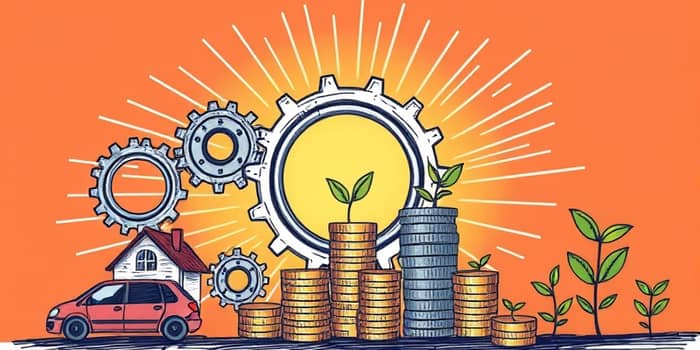
Secured loans operate as a powerful lever for individuals and businesses alike, converting existing assets into fresh capital. By pledging collateral—whether a home, vehicle, savings account or investment portfolio—you gain access to funds on more favorable terms than typical unsecured credit.
When managed responsibly, this approach becomes assets into powerful financial leverage, driving long-term wealth-building and credit enhancement. In this article, we explore how you can harness secured loans as an actionable growth toolkit.
Understanding Secured Loans
A secured loan is simply credit backed by collateral. The lender places a lien on your pledged asset. On full repayment, the lien is removed; on default, the lender may seize the collateral.
Two core mechanics distinguish secured loans: they reduce lender risk, enabling leveraging collateral for better terms, and they raise your borrowing capacity. As a result, borrowers can pursue ambitious goals—buying property, consolidating debt or expanding a small business—while enjoying lower interest rates and higher limits compared to unsecured debt.
Types of Secured Loans
- Mortgages and Home Equity Loans/HELOCs: Real estate serves as collateral. Ideal for property purchases or tapping equity to fund renovations, education or investment.
- Auto Loans: Vehicles secure the loan. Facilitates affordable financing for reliable transportation, with terms that often match the expected lifespan of the car.
- Secured Personal Loans: Flexible credit you can use for debt consolidation, major purchases or emergency expenses, collateral can range from financial assets to valuables.
- Secured Credit Cards: Your cash deposit becomes your credit limit. A simple path to rebuilding or establishing credit by making small purchases and paying on time.
- Business Loans: Company assets—inventory, equipment, receivables—support expansion, hiring or operational upgrades at competitive rates.
- Savings- or Certificate-Backed Loans: Use your savings account or CD as collateral. Borrow up to a percentage of your balance, while your savings continues to earn interest.
- Credit Builder Loans (CBLs): The borrowed funds are held in a locked account. You repay in installments, building credit history until the funds are released.
Credit builder loans often feature:
- Loan sizes typically under $1,000 for 6–24 months
- Funds held in escrow until repayment
- Variants like matched-savings programs that double your final balance
Secured vs. Unsecured Loans: A Comparative View
To understand why secured loans can accelerate financial growth, compare their characteristics with those of unsecured debt:
Advantages of Secured Loans
- Lower borrowing costs: Interest rates decrease when risk is mitigated by collateral.
- Higher borrowing limits for growth: Secure larger sums to fund major investments, like real estate or business expansion.
- Easier access for credit building: Ideal for thin-file or low-score borrowers seeking new credit opportunities.
- Significant credit score improvements: Credit builder loans can boost scores by 40–60 points within months.
- Tax-deductible interest: Mortgage and home equity loan interest may qualify for deductions.
- Dual-purpose savings leverage: Collateralized savings continue to earn interest, maximizing return on idle funds.
Weighing the Risks
While secured loans unlock powerful benefits, borrowers must proceed with caution. The primary risk is collateral seizure upon default, which can include your home, vehicle or savings balance.
Other considerations include possible origination or late fees, and restrictions on how borrowed funds may be used. In savings-secured loans, funds remain locked until the loan is repaid, so maintain liquidity to avoid hardship.
Real-World Impact and Data
Quantifiable evidence underscores the growth potential of secured credit:
Credit builder loans offered by specialized lenders have produced average score gains of 47 points without coaching, and up to 60 points with expert support. Borrowers reap both a stronger credit profile and a growing savings balance.
Studies show that borrowers using secured loans for debt consolidation can save up to 20% on interest payments compared to unsecured consolidation products. Meanwhile, mortgages enable homeowners to build equity—often outpacing inflation and delivering real returns over decades.
Strategic Applications for Growth
Secured loans can power a variety of financial strategies:
- Debt Consolidation: Combine high-interest unsecured debts into a single, lower-rate mortgage or home equity line.
- Credit Rehabilitation: Use secured credit cards and CBLs to build a strong on-time payment history.
- Business Expansion: Leverage equipment or real estate to secure capital for hiring, marketing or product development.
- Opportunity Seizing: Tap home equity quickly to invest in real estate flips, further diversifying assets.
- Savings Acceleration: Choose savings-secured loans that lock funds while earning interest, creating forced savings discipline.
Choosing and Managing Secured Loans
To harness maximum benefit, always assess your repayment capacity before pledging assets. Compare APRs, fees and term lengths across lenders.
Maintain responsible payment habits by setting up automatic transfers. Monitor your credit report to track improvements and adjust your strategy as you gain borrowing power.
Finally, treat secured loans as one component of a broader financial plan—paired with emergency savings, diversified investments and professional guidance when needed.
When used thoughtfully, secured loans become more than just borrowing tools. They transform into a dynamic growth engine, accelerating your journey toward long-term financial security and prosperity.
References
- https://www.equifax.com/personal/education/personal-finance/articles/-/learn/what-is-a-secured-loan/
- https://www.greateralliance.org/the-different-types-of-secured-loans-which-one-is-right-for-you/
- https://www.onemainfinancial.com/resources/loan-basics/whats-the-difference-between-a-secured-and-unsecured-loan
- https://www.ne.bank/secured-vs-unsecured-lending
- https://www.bankrate.com/loans/personal-loans/secured-vs-unsecured-personal-loans/
- https://benefits.va.gov/homeloans/real-estate/toolkit/index.asp
- https://www.experian.com/blogs/ask-experian/secured-vs-unsecured-loans-what-you-should-know/
- https://www.capitalone.com/learn-grow/money-management/secured-loan/
- https://greenvillefcu.com/what-is-the-difference-between-secured-and-unsecured-debt/
- https://www.fsa.usda.gov/resources/programs/guaranteed-farm-loans/lender-toolkit