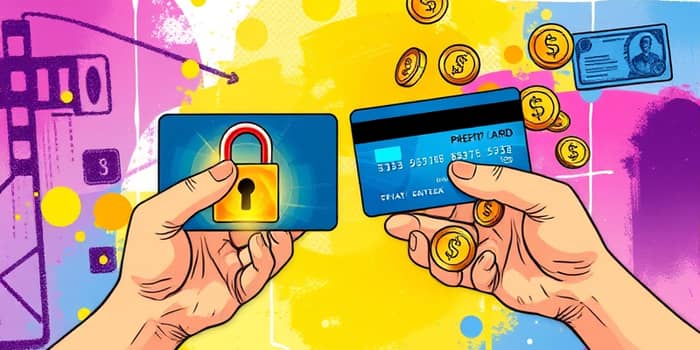
Choosing between prepaid and secured credit cards can feel like navigating a financial maze. Each option offers
distinct benefits and pitfalls, making the decision deeply personal. By understanding their mechanics, fees, and long-term impacts, you can align your choice with your goals—whether that means building credit or managing daily expenses.
Understanding Secured and Prepaid Cards
A secured credit card requires a refundable security deposit typically equal to your limit. You borrow against that deposit, and monthly payments build your credit profile. In contrast, a prepaid card functions like electronic cash. You load funds before spending and never incur debt.
Secured cards report payment history to credit bureaus, helping those with limited or poor credit reestablish their financial reputation. Prepaid cards do not affect credit scores, since no borrowing occurs and no credit data is shared with bureaus.
Building Credit or Managing Your Budget
For many, credit is a gateway to better rates on loans, mortgages, and insurance. A secured card gives you an opportunity to establish or rebuild credit by making timely payments and maintaining a low balance relative to your limit.
When used responsibly, secured cards can unlock access to traditional, unsecured credit products. The deposit remains yours and is refunded when you graduate to a higher-tier card or close the account in good standing.
Prepaid cards, on the other hand, excel at helping you stick to a strict spending plan. By loading only the amount you intend to spend, you impose an automatic cap on your expenses. This method can be a powerful tool for those wanting to
control spending and avoid debt effectively.
Fees, Advantages, and Disadvantages
Both card types carry costs, but their structures differ dramatically. Secured cards often involve an annual fee and potential late payment fees, though interest can be avoided by paying your balance in full each month.
Prepaid cards, however, come with a numerous potential fees can accumulate quickly. Activation, monthly maintenance, ATM withdrawals, reloads, and inactivity fees can chip away at your balance.
- Secured Card Advantages:
- Build or rebuild credit history
- May qualify for unsecured cards later
- Offers standard fraud protection
- Suitable for less-than-perfect credit
- Prepaid Card Advantages:
- No credit check required
- Helps enforce budgets
- No interest charges ever
- No bank account needed
There are downsides as well. Secured cards lock up your deposit and require discipline to avoid interest fees. Prepaid cards never build credit and may impose heavy charges that outpace their convenience.
Deciding Which Option Suits You
Your financial journey hinges on your goals. If you dream of buying a home, securing a loan, or improving an existing credit score, a secured card is a strategic ally. Your conscientious payments become a testament to reliability in the eyes of lenders.
Conversely, if you want a straightforward spending tool to replace cash, avoid debt, or teach budgeting skills to a teenager, a prepaid card delivers simplicity without credit risks.
Consider these factors as you weigh your options:
- Long-term value vs. short-term control: Secured cards grow your credit; prepaid cards cap your expenses.
- Upfront and ongoing costs: Calculate deposit amounts and fee schedules to find the best deal.
- Credit accessibility: Secured cards require a check; prepaid cards welcome all users.
- Future goals: Are you building credit or simply managing a budget?
By examining your priorities, budget constraints, and financial aspirations, you can choose a card that empowers your journey. Whether you wield a secured card as a stepping stone to greater credit freedom or a prepaid card as a guardian against overspending, the right tool lies within your grasp.
Ultimately, knowledge is your greatest asset. Armed with clarity about fees, deposits, credit impact, and reporting, you can navigate the world of credit alternatives with confidence. Embrace the path that aligns with your vision, and let each payment or purchase propel you toward financial well-being.
References
- https://www.sofi.com/learn/content/secured-vs-prepaid-credit-cards/
- https://www.ptla.org/pre-paid-debit-cards-are-they-good-deal
- https://www.capitalone.com/learn-grow/money-management/secured-prepaid-card/
- https://www.tdecu.org/blog/pros-and-cons-of-prepaid-cards
- https://www.nerdwallet.com/credit-cards/learn/prepaid-debit-cards-secured-credit-cards-difference
- https://www.oneunited.com/blog/the-pros-and-cons-of-prepaid-cards/
- https://www.experian.com/blogs/ask-experian/secured-card-vs-prepaid-card/
- https://www.microsoft.com/en-us/microsoft-365-life-hacks/budgeting/the-pros-and-cons-of-pre-paid-debit-cards
- https://www.citi.com/credit-cards/understanding-credit-cards/prepaid-card-vs-secured-credit-card
- https://www.pathward.com/news/what-are-prepaid-cards--and-how-do-they-work-/
- https://www.freedomdebtrelief.com/learn/personal-finance/secured-credit-cards-vs-prepaid-debit-cards/
- https://www.bill.com/blog/prepaid-card-for-business
- https://consumer.ftc.gov/node/78357
- https://www.sofi.com/learn/content/prepaid-debit-cards-cards-pros-and-cons/
- https://www.oneunited.com/blog/secured-credit-cards-vs-prepaid-cards/