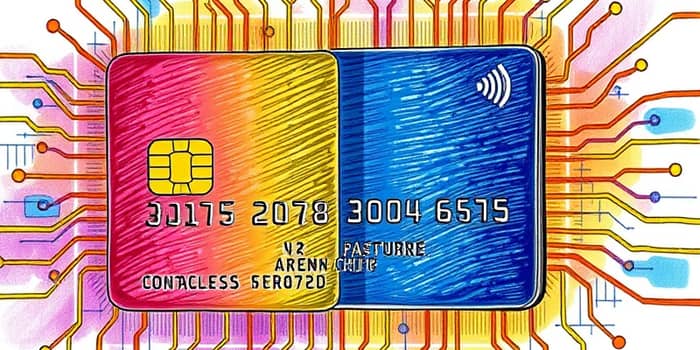
In a world where digital payments reign supreme, understanding the inner workings of your credit card is more than just trivia—it’s a vital skill. By dissecting each physical and digital component, you gain the knowledge to maximize benefits and minimize risks.
Introduction to Card Design
Every credit card you hold is the result of meticulous design, combining tangible elements with advanced technology. From the subtle curvature of the edges to the strategic placement of the EMV chip and magnetic stripe, every feature serves a clear purpose.
Physical Anatomy: Front and Back Features
The front and back of a credit card house a wealth of information. Each detail—be it visual or tactile—guides its use and secures transactions.
- Issuer Name and Logo: Identifies the bank or institution granting the credit line and shapes the card’s rewards and benefits.
- Network Logo and Number Prefix: Displays the payment network (Visa, Mastercard, Amex) and hints at routing rules.
- Cardholder Name and Expiry Date: Personalizes the card and indicates validity period.
- EMV Chip: The metallic square on the front that generates a unique one-time cryptogram per transaction, making cloning extremely difficult.
- Contactless/NFC Antenna: Enables tap-to-pay functionality with dynamic data generation for added security.
- Magnetic Stripe (Back): Legacy technology storing static data, gradually being phased out in favor of EMV and NFC.
- Signature Panel and CVV Code: Provides offline verification and secures card-not-present transactions with a three- or four-digit code.
PAN Structure Demystified
The Primary Account Number (PAN) is the 8-to-19-digit identifier that ties each card to your account. It contains multiple layers of meaning and error-checking.
The first 6–8 digits, known as the BIN or IIN, route transactions to the correct issuer. The final digit is a check digit validated by the Luhn algorithm, ensuring that any mistyped numbers are promptly caught.
Security Mechanisms: Safeguarding Your Data
Modern credit cards are fortified by multiple layers of protection designed to thwart fraud and preserve trust. These mechanisms work in concert to ensure every transaction remains confidential and authentic.
- EMV Chip Cryptography: Generates a one-time code that stops magnetic-stripe cloning in its tracks.
- Encryption: Uses AES or RSA algorithms to scramble data both in transit and at rest, enforcing end-to-end protection.
- Tokenization: Replaces sensitive data with non-sensitive surrogate tokens, nullifying stolen information.
- Dynamic CVV Codes: Emerging solutions print a changing security code on the back, adding another dynamic layer.
Transaction Flow: From Tap to Settlement
Every purchase triggers a complex choreography between the card, merchant, networks, and banks. Understanding this flow helps you appreciate the safeguards and the speed at which your payments are processed.
- Card Read: EMV chip insertion, NFC tap, or magnetic swipe captures initial data.
- Data Handling: Information is encrypted or tokenized to protect against interception.
- Routing: BIN directs the authorization request through the payment network to the issuer.
- Authorization: Issuer validates the cryptogram or CVV, checks limits, and returns an approval or decline.
- Settlement: Funds are transferred from issuer to acquirer, finalizing the transaction.
The Evolution of Card Technology
The journey from magnetic stripes to contactless chips reflects the industry’s relentless pursuit of security and convenience. In the 1970s, the magnetic stripe revolutionized payments by digitizing account data. By the 2010s, EMV chips introduced robust fraud prevention through dynamic cryptography.
Today, contactless and mobile wallet integrations offer tap-and-go experiences, underpinned by tokenization and biometric authentication. Looking ahead, biometric cards with embedded fingerprints and blockchain-based settlement systems promise to usher in yet another era of innovation.
By grasping the design, structure, and security of your credit card, you not only ensure safer transactions but also leverage features that enhance convenience and rewards. Stay informed, stay secure, and make each swipe or tap count toward building a healthier financial future.
References
- https://www.youtube.com/watch?v=qI66AufeYqE
- https://www.chargeback.io/blog/what-is-creditcard-encryption-how-does-it-work
- https://blog.basistheory.com/credit-card-anatomy
- https://rapidcents.com/blog/payments/the-encryption-behind-software-credit-card-processing/
- https://zenn.dev/su8/articles/74b2055e16f030?locale=en
- https://www.mtb.com/business/merchant/credit-card-fraud-protection/encryption-tokenization
- https://www.quickenloans.com/learn/anatomy-of-a-credit-card
- https://www.metomic.io/resource-centre/how-to-detect-and-protect-credit-card-exposure-in-the-cloud
- https://www.citizensbank.com/learning/credit-card-innovation-design.aspx
- https://www.cardlogix.com/industry-news/credit-card-encryption-how-does-a-security-pass-card-work/
- https://groundlabs.com/blog/anatomy-of-a-credit-card
- https://payarc.com/credit-card-encryption/
- https://stripe.com/resources/more/how-credit-card-transaction-processing-works-a-quick-guide
- https://www.airwallex.com/blog/tokenization-vs-encryption
- https://en.wikipedia.org/wiki/Payment_card_number