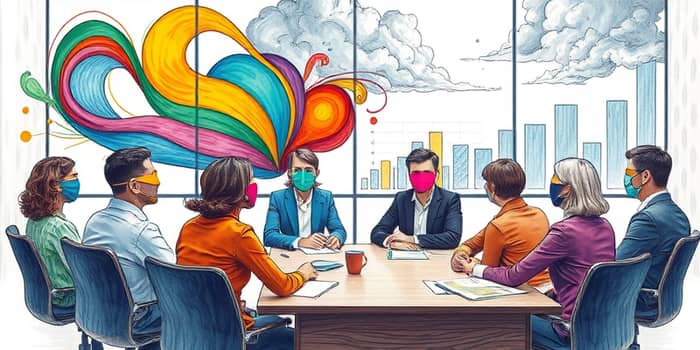
In today’s fast-paced business landscape, organizations face increasingly complex threats. Yet, the most dangerous risks often stem not from external forces, but from within—rooted in our own minds. Behavioral blind spots in risk assessment can distort judgment, leading even the most seasoned executives astray. By shining a light on these hidden biases, we can forge more resilient strategies and protect our organizations from unforeseen pitfalls.
Understanding Behavioral Blind Spots
Behavioral blind spots refer to systematic errors in thinking that cause individuals and teams to miss, misinterpret, or downplay critical threats. These invisible distortions emerge from deep within our cognitive processes, shaping how we interpret data, weigh probabilities, and make strategic decisions.
Often, leaders operate under a comforting illusion that comes from repeated successes or widely shared assumptions, creating a false reality about markets and operations. When unchecked, this illusion can foster a sense of invulnerability, leaving organizations exposed to market shifts, regulatory upheavals, and disruptive innovations.
The Human Cost of Ignoring Bias
History is littered with cautionary tales. The 2008 financial crisis unfolded partly because mortgage lenders and rating agencies fell prey to optimism bias and overconfidence, convinced that housing prices would always rise. In 2023, several mid-sized banks collapsed due to misjudged interest rate risks, as executives clung to outdated models and ignored warning signs.
Beyond financial loss, the human cost can be profound. Employees demoralize under constantly shifting or reactive strategies. Board members who feel excluded—victims of groupthink or herd mentality—may disengage, missing opportunities to contribute valuable insights. Communities can suffer when corporate myopia fails to anticipate environmental or social consequences.
Core Cognitive Biases and Their Impacts
More than a dozen biases can infiltrate risk assessments, but some are particularly insidious:
- Confirmation Bias: Seeking only evidence that supports existing beliefs, often ignoring red flags and contradictory data.
- Anchoring Bias: Fixating on initial figures or projections, making it hard to adjust estimates in light of new information.
- Planning Fallacy: Underestimating the time and resources needed to complete major projects, leading to inadequate contingencies.
- Hindsight Bias: Believing that past events were predictable after they occur, which undermines genuine learning.
- Negativity Bias: Overweighting negative outcomes and stalling strategic innovation out of fear.
Each bias alone can warp judgment, but when combined, they create a formidable barrier to sound decision-making. Organizations may implement robust risk frameworks on paper, only to see them rendered ineffective by unconscious mental shortcuts.
Detecting Blind Spots Early
Identifying blind spots requires vigilance and a willingness to challenge comfortable narratives. Key red flags include frequent assurances that “everything is great,” resistance to new ideas, or an overreliance on historical data without questioning its applicability. Board members who feel hesitant to speak up or teams that default to consensus can signal deeper issues.
Regularly soliciting external perspectives—through independent risk audits, peer reviews, or stakeholder surveys—can uncover hidden vulnerabilities. Simple tools like bias checklists, which pose targeted questions around optimism, anchoring, and ambiguity, encourage deliberate reflection before finalizing decisions.
Strategies to Mitigate Risk Blind Spots
Combating behavioral blind spots demands a multi-faceted approach. No single tactic can eliminate bias, but integrated strategies can significantly reduce its impact.
Further best practices include:
- Embedding objective risk matrices that evaluate threats across probability and impact axes.
- Conducting regular stress tests and contingency drills to reveal process cracks before crises hit.
- Establishing clear feedback loops with employees, customers, and suppliers to catch emerging issues early.
Building a Culture of Continuous Learning
Risk management should never be static. Successful organizations foster a culture where questioning assumptions is encouraged, and failures are treated as learning opportunities rather than disasters. Executives can model this behavior by acknowledging their own mistakes and highlighting how insights from past missteps informed new strategies.
Training programs focused on emotional intelligence, group dynamics, and cognitive bias awareness reinforce the importance of self-reflection. Pairing these with bias-specific checklists ensures that participants think critically about optimism, confirmation, and other tendencies during decision-making sessions.
Practical Next Steps
Leaders ready to address behavioral blind spots can begin with these key questions:
- Which assumptions underpin our strategic plans, and how can we test them?
- What mechanisms exist for whistleblowers and dissenting voices to be heard?
- How frequently do we review and update our risk scenarios in light of new data?
- Are we leveraging external audits or peer perspectives to challenge internal views?
- Do our governance structures reward balanced decision-making over short-term gains?
Embracing Resilience Through Awareness
By acknowledging the prevalence of behavioral blind spots and proactively addressing them, organizations can transform vulnerability into strength. This journey requires humility, curiosity, and a steadfast commitment to continuous improvement. When leaders genuinely embrace diverse views, rigorous analysis, and open dialogue, they create a resilient enterprise—one capable of navigating uncertainty and thriving in the face of change.
Ultimately, uncovering our own mental blind spots is not a one-time project but an ongoing practice. It calls on us to remain vigilant, question our deepest assumptions, and welcome discomfort as a catalyst for growth. In doing so, we build organizations that are not only safer but also more innovative, agile, and human-centered.
References
- https://www.corporatecomplianceinsights.com/out-sight-spot-behavioral-strategic-organizational-blind-spots/
- https://www.insurancethoughtleadership.com/risk-management/cognitive-biases-hurting-risk-management
- https://www.salesforce.com/workdifferently/articles/how-to-avoid-risk-blindspots-and-enable-innovation/
- https://www.undrr.org/news/cognitive-biases-how-we-can-make-better-decisions-about-risk
- https://lifestyle.sustainability-directory.com/term/behavioral-policy-blindspots/
- https://pmc.ncbi.nlm.nih.gov/articles/PMC7398041/
- https://careerminds.com/blog/leadership-blind-spots
- https://safetyrisk.net/20-cognitive-biases-that-affect-risk-decision-making/
- https://inscapeconsulting.com/the-hidden-cost-of-behavioral-blind-spots/
- https://www.rhsmith.umd.edu/news/risk-matters-where-models-and-cognitive-bias-collide
- https://www.nacdonline.org/all-governance/governance-resources/directorship-magazine/online-exclusives/2023/December2023/blindspots-in-the-boardroom/
- https://www.corporatecomplianceinsights.com/risk-assessments-cognitive-bias/
- https://www.rmmagazine.com/articles/article/2025/11/06/how-to-overcome-cognitive-biases-in-risk-management
- https://www.mrg.com/addressing-leadership-blind-spots-through-coaching/