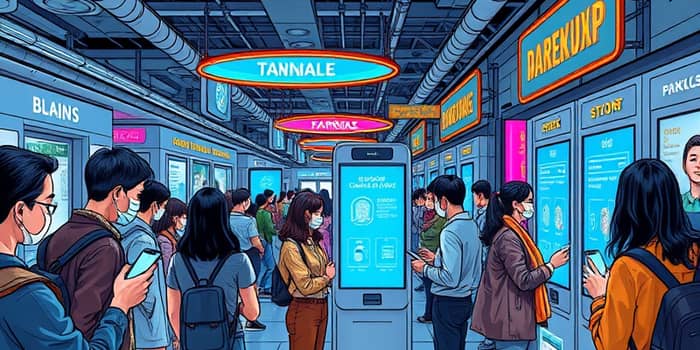
In an era defined by rapid technological change, the way we pay for goods and services is undergoing a profound transformation. What was once a handshake and cash exchange has evolved into a world of taps, scans, and invisible transactions. From bustling city streets to remote rural villages, contactless payments have become a global standard, unlocking new possibilities for consumers, merchants, and financial institutions alike.
This article explores the key trends, regional dynamics, and practical strategies that will help you navigate and thrive in the payments landscape of 2026 and beyond. Whether you are a small business owner, a tech enthusiast, or a consumer eager to streamline your daily purchases, you’ll discover actionable insights and inspiring visions for a truly borderless, touch-free future.
Embracing the Contactless Revolution
By 2024, contactless payments soared to 23% of global card spending, reaching US$10.4 trillion across 456.6 billion transactions. This surge reflects not only a post-pandemic preference for hygienic checkouts but also the desire for seamless tap-and-go transactions at every point. With digital wallets poised to hit 5 billion users by 2026, the era of fumbling for cash and swiping cards is giving way to instant, effortless exchanges.
Regional adoption underscores the momentum. Europe leads with 71% of contactless card transactions, driven by wearables and open banking. APAC follows at 82%, powered by QR codes and super apps like Alipay. North America boasts a 70% adoption rate, with a fivefold increase in tap-to-pay since 2020. Even the MENA region is rapidly closing the gap, at 56% adoption via NFC and account-to-account transfers. This global tapestry highlights a shared vision: payment experiences must be fast, secure, and accessible to all.
Innovations Shaping 2026 and Beyond
The contactless surge is underpinned by a suite of cutting-edge technologies. Tokenization and advanced biometrics safeguard transactions, while voice-based interfaces offer hands-free convenience. SoftPOS solutions transform smartphones into payment terminals, extending financial access to small merchants and underserved communities.
Key trends on the horizon include:
- Tap-to-Phone adoption growing over 40% as smartphones double as POS devices
- Real-time settlement through instant rails like FedNow and SEPA Instant
- Biometric authentication for trillions in transactions via fingerprints, facial scans, and voice prints
- Embedded payments seamlessly integrated into apps, IoT devices, and ecosystems
By 2030, experts forecast over 1 trillion contactless transactions, with the market value exceeding USD 33.9 billion. These figures speak not only to scale but to the depth of integration—payments are no longer an afterthought, they are woven into our daily lives and digital interactions.
Regional Growth at a Glance
Understanding regional dynamics can guide strategic decisions for businesses and policymakers. The following table highlights growth rates, adoption drivers, and penetration levels for four key regions:
Practical Steps for Businesses and Consumers
Embracing the future of payments requires both vision and action. Here are concrete steps you can take today to stay ahead of the curve:
- Upgrade terminals: Ensure your POS systems support dual-interface NFC and QR code payments.
- Offer digital wallets: Integrate Apple Pay, Google Pay, and region-specific super apps to cater to diverse customers.
- Leverage SoftPOS: Enable smartphones as secure payment terminals to expand reach into rural or mobile markets.
- Implement tokenization: Protect card data with robust encryption and dynamic security codes to minimize fraud.
- Explore biometrics: Pilot fingerprint or facial recognition solutions for premium, authenticated experiences.
Consumers, too, can optimize their payment habits. Consolidate cards into a single mobile wallet, enroll in instant settlement programs to avoid delays, and activate tokenization on your devices for peace of mind.
Overcoming Challenges and Looking Ahead
Despite remarkable progress, the path forward includes hurdles. Regulatory frameworks like PSD2 and SCA require ongoing alignment. Infrastructure expansion—projected to reach near-universal contactless enablement by 2030—demands investment and collaboration. Fraud prevention must keep pace with evolving threats, balanced with seamless user experiences.
Yet these challenges are also enablers. Open banking creates data-driven personalization. Instant rails empower small businesses with same-day fund settlement and cash flow benefits. Embedded payments transform traditional services into holistic digital ecosystems. As payments become invisible—embedded in ride-hailing apps, wearable devices, and even connected appliances—our focus shifts from "how" we pay to "what" we experience.
In this unfolding landscape, success belongs to those who embrace innovation, adapt swiftly, and center the human element. By prioritizing security, convenience, and inclusivity, businesses can foster loyalty and drive growth. Consumers, empowered by instant, touch-free transactions, can reclaim time and trust in every exchange.
The future of payments is not a distant horizon—it is happening now. Whether you are upgrading your point-of-sale system, choosing your next smartphone, or simply tapping your watch at the café, you are part of a global movement toward speed, security, and simplicity. Let's step confidently into this new era, where every interaction is an opportunity to connect, transact, and flourish.
References
- https://datos-insights.com/blog/global-card-payments-trends/
- https://www.digipay.guru/blog/top-contactless-payments-trends-to-watch/
- https://www.eposnow.com/us/resources/payment-trends-in-2026-evaluation-and-predictions/
- https://www.researchandmarkets.com/reports/6014745/contactless-payments-market-global-forecast
- https://www.ibisworld.com/united-states/industry/contactless-payment-systems/6269/
- https://www.juniperresearch.com/resources/blog/11-payment-stats-you-need-to-know-for-2026/
- https://www.mastercard.com/global/en/news-and-trends/stories/2025/2026-payment-trends.html