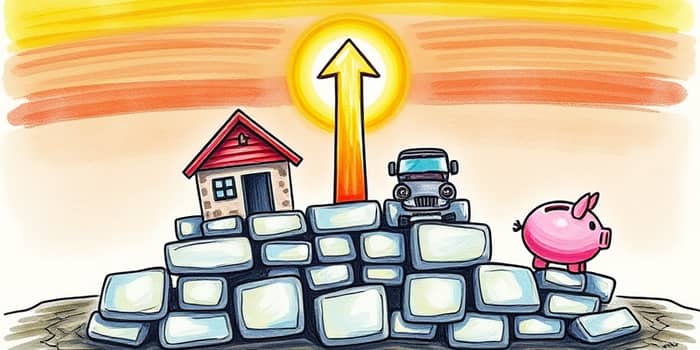
Every journey toward financial empowerment begins with a single, strategic decision. Secured loans, backed by the borrower’s own assets, can transform the way individuals access credit and manage their finances.
By treating these instruments as more than just borrowing tools—using them as foundational pillars of long-term stability—borrowers can leverage assets to lay down strong financial roots. This article explores how secured loans work, their unique advantages and risks, and practical strategies to harness them for a healthier financial future.
Understanding Secured Loans
Secured loans are credit products where the lender places a lien on a borrower’s collateral—assets such as homes, vehicles, savings accounts, or other valuables—until the loan is repaid in full.
This structure significantly reduces lender risk and translates into more affordable interest rates and improved access for those with lower credit scores. Most secured loans are installment loans, meaning they are disbursed as a lump sum and repaid through fixed monthly payments over a set term.
Typical examples include mortgages, auto loans, home equity loans or lines of credit (HELOCs), savings-secured loans, secured credit cards, and even certain business financing options. If a borrower defaults, the lender can repossess or foreclose on the collateral to recover losses, making default a serious consequence but offering lenders protection to offer favorable terms.
Advantages and Drawbacks
A balanced approach is vital when considering secured credit. The benefits are compelling, but the risks should not be overlooked. Below is a concise overview:
Real-World Cost Comparisons
Numbers bring concepts to life. Consider these scenarios illustrating how secured financing can yield significant savings:
Borrowing $10,000 over three years at 21.65% APR via an unsecured loan results in a monthly payment of $380.10 and total interest of $3,683. By contrast, a secured loan at 16.65% APR delivers payments of $354.79 and total interest of $2,772—saving nearly $911 over the term.
Alternatively, a savings-secured loan of $18,635 at 3.88% APR for 60 months translates to just $18.36 per $1,000 borrowed each month, illustrating how using existing deposits can unlock ultra low-cost borrowing while preserving deposits.
In another example, a $12,000 unsecured loan at 12.75% APR for 36 months yields payments of $403 per month, highlighting how variable rates on unsecured debt can inflate costs. In 2026, top secured personal loan rates start as low as 3.50% at credit unions accepting savings collateral, versus up to 35.99% for secured auto loans with less established lenders.
Types of Secured Loans and Collateral Options
- Savings/CD-Secured Loans: Collateral is a savings account or certificate of deposit, offering rates as low as savings rate plus 3% and the double benefit of earning dividends.
- Vehicle-Secured Loans: Use cars and trucks as collateral, sometimes accepting vehicles up to 20 years old and credit scores as low as 580.
- Home Equity Loans and HELOCs: Tap into the value built in real estate for large sums and extended terms, ideal for home improvement or major expenses.
- Secured Credit Cards: Deposit-based credit lines that help rebuild credit when used responsibly and paid off monthly.
- Other Asset-Backed Financing: Loans against business equipment, collectibles, or other valuables tailored to specific needs.
Choosing the Right Lender
- Credit Unions such as DCU and First Tech FCU often lead with rates starting at 3.50%–3.88%, flexible terms up to 96 months, no fees, and options to skip payments in emergencies.
- Online Lenders like Upgrade provide car-secured loans at 7.74%–35.99% APR, with features like origination fee waivers for strong profiles and changeable due dates.
- Traditional Banks typically offer secured personal loans from 8.74%–24.99% APR, requiring minimum credit scores around 680 for fast funding within days.
- Peer-to-Peer Platforms and specialty lenders can present competitive rates and funding speeds, but require careful comparison to avoid hidden fees.
Strategic Uses for Long-Term Stability
When leveraged thoughtfully, secured loans become engines for growth rather than mere liabilities. Here are pivotal strategies:
Building Credit Over Time: Consistent, on-time payments demonstrate reliability, boosting credit scores and unlocking future financing options at even lower rates.
Debt Consolidation: Combining high-interest obligations into one lower-rate secured loan simplifies finances, reduces monthly outflow, and accelerates principal repayment.
Accessing Emergency Funds: A secured line of credit or revolving HELOC provides a safety net, bridging financial gaps without panic or high-cost borrowing.
Asset Optimization: Instead of selling investments or property during cash shortfalls, collateralized borrowing preserves long-term wealth-building trajectories.
Navigating the Application Process
Begin by gathering documentation of asset ownership—titles, account statements, and recent appraisals. Provide proof of income and identification so the lender can assess your credit and repayment capacity. For real estate or vehicle collateral, schedule an appraisal or valuation as required by the lender. Finally, compare APRs, fees, term lengths, and disbursement timelines across multiple institutions to secure the best possible arrangement.
Many credit unions and online lenders offer prequalification tools, live chat support, and expedited funding options, sometimes delivering approved funds within one to two business days.
Emerging Trends and Alternatives
- Post-2025, secured rates dip below 4%, emphasizing credit rebuild programs offered by credit unions amid shifting economic landscapes.
- Alternatives such as unsecured lines of credit provide smaller sums with variable rates but bypass collateral risks.
- Fintech solutions now integrate automated repayment reminders and digital collateral management portals for unmatched convenience.
Evaluating these options ensures borrowing aligns with personal comfort levels and financial objectives, minimizing surprises and maximizing control.
Empowering Your Financial Journey
Secured loans, when wielded with knowledge and discipline, can be transformative. They offer a bridge to lower cost credit, a vehicle for credit improvement, and a springboard toward long-term prosperity.
Before taking action, borrowers should assess collateral values, realistic repayment plans, and the comparative landscape of lenders. Armed with this information, each loan becomes not just a transaction, but a deliberate step on a roadmap to financial independence and security.
Your financial foundation thrives on informed decisions. By embracing secured loans strategically, you empower yourself to build wealth, weather emergencies, and chart a course toward lasting stability.
References
- https://hfsfcu.org/education/what-is-a-secured-loan/
- https://www.nerdwallet.com/personal-loans/best/secured-personal-loans-lenders
- https://www.bankrate.com/loans/personal-loans/what-is-a-secured-loan/
- https://www.firsttechfed.com/borrow/personal-loans/savings-secured-loan
- https://www.capitalone.com/learn-grow/money-management/secured-loan/
- https://www.lendingtree.com/personal/best-lenders-for-secured-loans/
- https://www.equifax.com/personal/education/personal-finance/articles/-/learn/what-is-a-secured-loan/
- https://www.bankrate.com/loans/personal-loans/rates/
- https://www.td.com/us/en/personal-banking/learning/unsecured-vs-secured-loan
- https://www.key.com/personal/loans-lines/personal-loans-lines.html
- https://www.usbank.com/financialiq/manage-your-household/manage-debt/secured-vs-unsecured-debt.html
- https://www.bankatfirst.com/personal/borrow/personal-loans/compare.html
- https://oportun.com/financial-education/secured-loans-what-they-are-how-they-work-and-when-to-use-them/
- https://www.cuwest.org/borrowing/more/savings-secured-loans
- https://www.citi.com/personal-loans/learning-center/basics/secured-vs-unsecured-loan