


Three numbers decide an external SSD, and the box only prints one of them honestly. The first is interface speed, set by the bus, not the drive. The second is sustained write speed after the fast cache fills, which the marketing figure ignores. The third is dollars per terabyte, the only number that should hurt. Get those straight and the durability rating, the encryption, and the cable in the box sort themselves out.
How these are ranked
We sorted these on researched specs and independent lab data, not on a week of carrying each one around. The order inside each group reflects real-world throughput on the bus most people actually have, then dollars per terabyte, then durability and encryption. A 20Gbps rating only counts if your machine speaks USB 3.2 Gen 2x2, which most laptops and every current Mac do not. Where a drive's headline speed needs an interface you probably lack, we say so and rank on the speed you will really see. Match the bus to your machine before you read the megabytes on the box, and you are already following the rule TrueAction ranks storage by.
- Interface is the ceiling. USB 3.2 Gen 2 tops out near 1,050 MB/s. USB 3.2 Gen 2x2 doubles that to about 2,000 MB/s, but only on PCs with that exact port. Thunderbolt 3, Thunderbolt 5, and USB4 are separate, faster lanes again.
- Macs do not support USB 3.2 Gen 2x2. Plug a Samsung T9 or Crucial X10 Pro into any current Mac and it falls back to 10Gbps, around 950 to 1,000 MB/s, regardless of the 2,000 on the label. The Thunderbolt ports do not change this.
- Sustained is not burst. Headline speeds hold while the drive's SLC cache has room. On long video dumps the cache fills and the write rate drops, sometimes by half. The figure that matters for a 200GB transfer is the floor, not the peak.
- Dollars per terabyte is the honest metric. A drive's price feels different at 1TB and 4TB. We list both the street price and the per-terabyte math so the value is comparable across capacities.
Everyday and value
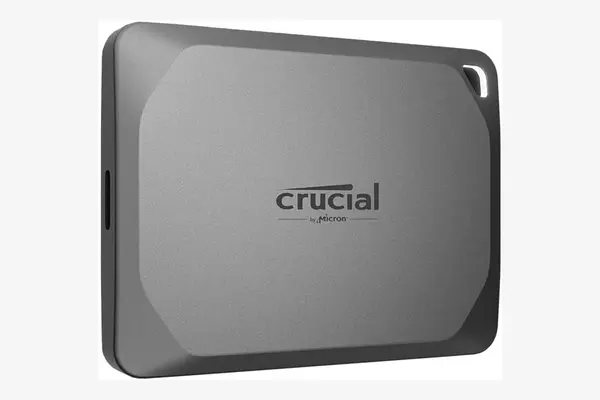
Crucial X9 Pro
Around 90 to 170 dollars for 1TB to 2TB as of February 2026
This is the drive most people should buy. It runs USB 3.2 Gen 2, so it tops out near 1,050 MB/s read and write, the same real-world speed you will see from a Samsung T9 on a Mac at a lower price. It carries an IP55 rating against dust and water and is rated to survive a drop of about 7.5 feet, which is unusual at this price. The tradeoff is honest: it is a 10Gbps drive, so it will not match a true 20Gbps PC setup, and the per-terabyte cost climbs less at 4TB than rivals. For a laptop, a console, or a photo backup, it is the best dollars per terabyte here.
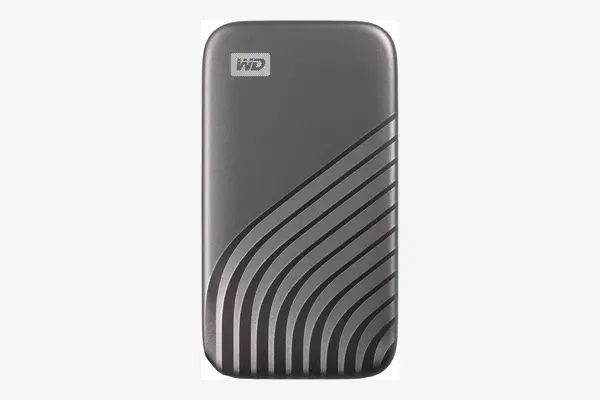
WD My Passport SSD
Around 100 to 200 dollars for 1TB to 2TB as of February 2026
The My Passport SSD is the unflashy one that just works as a backup. It runs USB 3.2 Gen 2 at up to 1,050 MB/s read and 1,000 MB/s write, ships with a USB-C cable plus a USB-A adapter for older machines, and includes 256-bit AES hardware encryption with password protection out of the box. It is rated for a 6.5-foot drop, the lowest of the rugged-leaning picks here, and it has no IP dust or water rating, so it is a desk and bag drive rather than a field drive. As a set-and-forget backup that locks your data without extra software, it earns its place.
Rugged picks
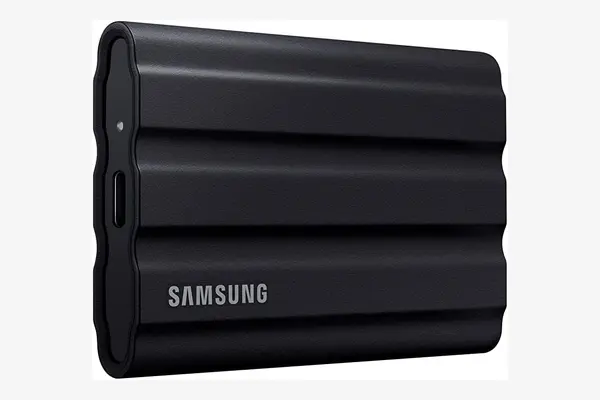
Samsung T7 Shield
Around 110 to 200 dollars for 1TB to 2TB as of February 2026
If the drive lives in a bag that gets rained on or dropped on gravel, this is the pick. It carries an IP65 rating, the strongest dust and water seal in this group, and a rubberized shell rated for a 9.8-foot drop. Speed is the familiar USB 3.2 Gen 2 ceiling of 1,050 MB/s read and 1,000 MB/s write, with Samsung's Dynamic Thermal Guard to hold the rate up on long transfers rather than thermally throttling early. Samsung rates the 4TB model at 1,200 terabytes written, which is years of normal use. The catch is the per-terabyte price at 4TB, which has been steep through 2026, so confirm the current price before buying the big one.
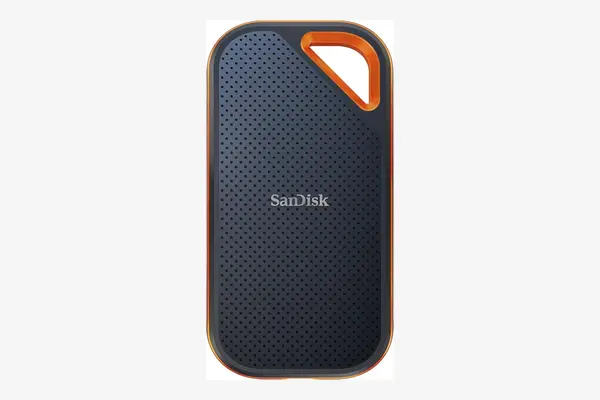
SanDisk Extreme Pro Portable SSD V2
Around 140 to 260 dollars for 1TB to 2TB as of February 2026
This one combines a rugged build with a 20Gbps interface, which is a rarer pairing. On a PC with a USB 3.2 Gen 2x2 port it reads and writes up to about 2,000 MB/s; on a Mac or a 10Gbps PC it caps near 1,000. It is rated IP55 for dust and water, survives a roughly 9.8-foot drop, includes 256-bit AES hardware encryption, and has a forged-aluminum core that doubles as a heatsink. One honest note from its history: earlier Extreme Pro units drew reports of data loss, and SanDisk shipped a firmware fix, so buy a current unit, update the firmware, and keep a second backup rather than treating any single drive as your only copy. With that caveat, it is the toughest fast drive here.
Fast picks
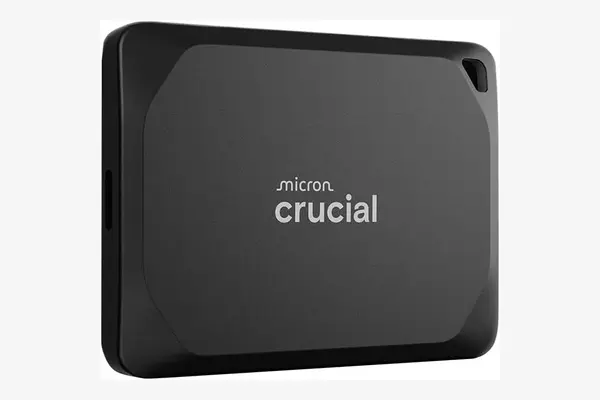
Crucial X10 Pro
Around 130 to 230 dollars for 1TB to 2TB as of February 2026
On the right PC this is the speed-per-dollar pick. Over USB 3.2 Gen 2x2 it reads up to 2,100 MB/s and writes up to 2,000, faster on paper than the Samsung T9 and cheaper per terabyte. It keeps the X-series ruggedness, IP55 and a 7.5-foot drop rating, plus hardware encryption and an activity light. The honest part is the same as for every 2x2 drive: that 2,100 figure needs a USB 3.2 Gen 2x2 port, which Macs and many PC laptops lack, where it drops to the 10Gbps ceiling near 1,000 MB/s. If your machine has the port, it is the value champion of the fast tier; if it does not, save money with the X9 Pro instead.
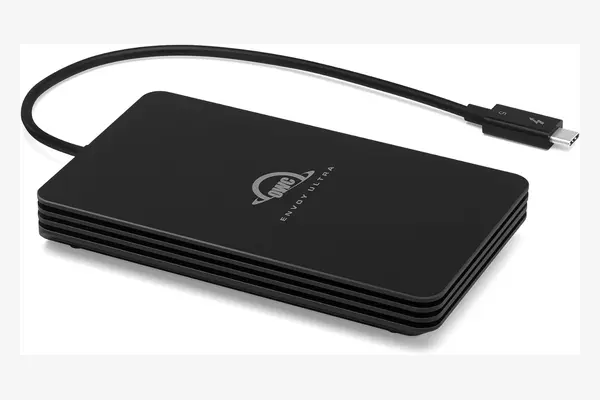
OWC Envoy Ultra (Thunderbolt 5)
Around 650 to 1,080 dollars for 2TB to 4TB as of February 2026
When the bus is the bottleneck, this is the drive that removes it. It uses Thunderbolt 5 and sustains read and write speeds over 6,000 MB/s end to end, roughly three times the fastest USB drive here and into single-NVMe territory that fits in a pocket. It is bus-powered with a built-in cable and stays compatible with Thunderbolt 3, Thunderbolt 4, and USB4 machines at their respective ceilings. Two real tradeoffs: it costs several times what a good USB SSD does per terabyte, and you only see the full speed on a Thunderbolt 5 host such as a recent M4 Pro or Max Mac. For editors scrubbing multi-stream footage off the drive, the time saved justifies it; for everyone else it is overkill.
Compared on the numbers
| Drive | Interface | Peak read | Real read on a Mac | Durability | Price (Feb 2026) |
|---|---|---|---|---|---|
| Crucial X9 Pro | USB 3.2 Gen 2 | 1,050 MB/s | ~1,000 MB/s | IP55, 7.5 ft | ~90 to 170 (1-2TB) |
| WD My Passport SSD | USB 3.2 Gen 2 | 1,050 MB/s | ~1,000 MB/s | 6.5 ft, no IP | ~100 to 200 (1-2TB) |
| Samsung T7 Shield | USB 3.2 Gen 2 | 1,050 MB/s | ~1,000 MB/s | IP65, 9.8 ft | ~110 to 200 (1-2TB) |
| SanDisk Extreme Pro V2 | USB 3.2 Gen 2x2 | 2,000 MB/s | ~1,000 MB/s | IP55, 9.8 ft | ~140 to 260 (1-2TB) |
| Crucial X10 Pro | USB 3.2 Gen 2x2 | 2,100 MB/s | ~1,000 MB/s | IP55, 7.5 ft | ~130 to 230 (1-2TB) |
| OWC Envoy Ultra | Thunderbolt 5 | 6,000+ MB/s | 6,000+ MB/s | Aluminum, no IP | ~650 to 1,080 (2-4TB) |
The 2,000 on the box is a PC number. On a Mac it is a 1,000 drive, and the Thunderbolt port does not save it.
Frequently asked questions
Almost certainly the interface. Drives like the Samsung T9, Crucial X10 Pro, and SanDisk Extreme Pro V2 advertise about 2,000 MB/s using USB 3.2 Gen 2x2, a 20Gbps mode that needs that exact port on the host. No current Mac supports it, and many Windows laptops do not either, so the drive falls back to plain USB 3.2 Gen 2 at 10Gbps, which caps near 1,000 MB/s. Having a Thunderbolt 4 or even Thunderbolt 5 port does not help, because those are a different standard. To actually see 2,000 you need a PC with a labeled USB 3.2 Gen 2x2 port; to go faster than that you need a Thunderbolt or USB4 drive instead.
Only if the drive leaves a desk. An SSD has no moving parts, so it already survives bumps a hard drive would not. The IP rating and drop spec matter when the drive lives in a camera bag, on a job site, or outdoors, where dust and water are real risks. The Samsung T7 Shield leads here with an IP65 seal and a 9.8-foot drop rating; the Crucial and SanDisk rugged drives sit at IP55. If your drive only ever moves between a desk and a laptop bag, a plain drive like the WD My Passport SSD is fine and cheaper, and you should rely on a second backup copy rather than ruggedness for safety.
For a mainstream 10Gbps drive in mid-2026, value picks like the Crucial X9 Pro land roughly in the range of a good consumer SSD, and the per-terabyte cost usually improves at 2TB versus 1TB before flattening at 4TB. The 20Gbps drives carry a modest premium for the faster interface, and rugged drives like the T7 Shield add a little more for the seal and shell. Thunderbolt 5 drives like the OWC Envoy Ultra cost several times as much per terabyte, which only pays off if you move very large files often. SSD prices have swung through 2026, so compare the live dollars-per-terabyte at the capacity you want rather than trusting a launch price.
Most people, best dollars per terabyte: the Crucial X9 Pro. Plug-and-go encrypted backup: the WD My Passport SSD. Lives in a bag and gets abused: the Samsung T7 Shield, the IP65 pick. Rugged and fast on a PC: the SanDisk Extreme Pro V2. Cheapest real 20Gbps speed: the Crucial X10 Pro, if your PC has the port. Editing large video off the drive: the OWC Envoy Ultra on a Thunderbolt 5 host. Match the bus to your machine first, then buy the smallest capacity that covers your library, and keep a second copy of anything you cannot lose.