


A power bank is one of the few gadgets where the headline spec is actively misleading and the rules around it have teeth. Before any pick, two things decide whether you buy the right one: how much of the rated capacity actually reaches your phone, and how large a bank you are allowed to fly with. Sort those, and choosing the bank itself is easy. Ignoring the printed mAh and leading with those two facts is exactly why a TrueAction pick ends up in your bag rather than a bigger number.
How to choose one
Power banks must travel in carry-on, never checked. Up to 100 watt-hours, roughly 27,000mAh, needs no airline approval; 100 to 160Wh needs approval and is capped at two. In 2026 several US airlines also require banks to stay visible and ban charging them in-flight, so check your carrier and keep the rating label legible.
Cells are rated at about 3.7 volts, but your phone charges at 5 volts or more, and that conversion loses energy as heat. You typically get back 65 to 85 percent of the printed capacity, so a 10,000mAh bank delivers closer to 6,500 to 7,500mAh in practice. Wireless charging loses more still.
A modern phone battery is around 3,000 to 5,000mAh. A 10,000mAh bank gives roughly one and a half to two full phone charges and stays pocketable; a 20,000mAh bank gives three to four and can top a tablet, but weighs and costs more. Buy the smallest one that covers your actual day.
Capacity is how much; wattage is how fast, and whether it can charge a laptop at all. A phone is happy at 20 to 30 watts; a full-size laptop wants 65 to 100 watts or more over USB-C Power Delivery. If you want to charge a laptop, the output wattage matters more than the mAh.
The six picks
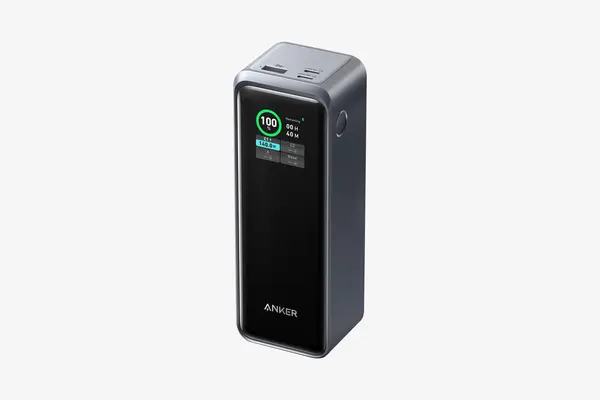
Anker Prime Power Bank (27,650mAh, 250W)
Around $150 to $180 as of June 2026
This is the bank for someone who charges a laptop on the move. It packs 250 watts of total output across two USB-C ports and a USB-A, enough to fast-charge a 16-inch laptop, and a crisp display showing exactly what is going in and out. At 27,650mAh it lands just under the 100-watt-hour line, so it still flies without airline approval. The price is steep and it weighs about a kilogram, so it is overkill if you only ever charge a phone, but nothing here moves more power.
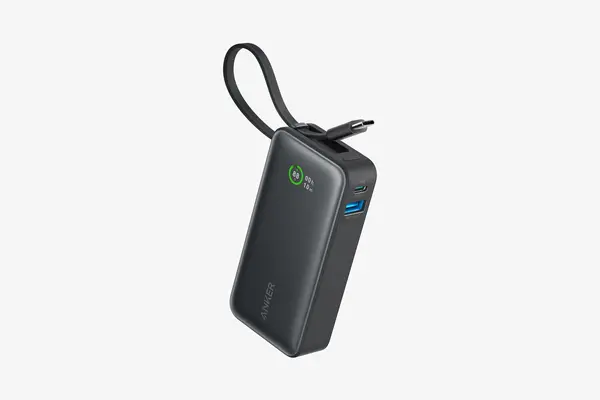
Anker Nano Power Bank (10K, 30W)
Around $30 to $50
For a single phone and a pocket, this is the one. It is a slim 10,000mAh bank with a built-in USB-C cable, so there is no separate lead to forget, a small display for the charge level, and 30 watts of output, which fast-charges a phone if not a laptop. At about 215 grams it disappears into a bag. The honest caveats are that 30 watts is phone-speed only and that, like any 10K pack, you get roughly six to seven thousand mAh back in real use. As a daily top-up, it is hard to beat for the money.
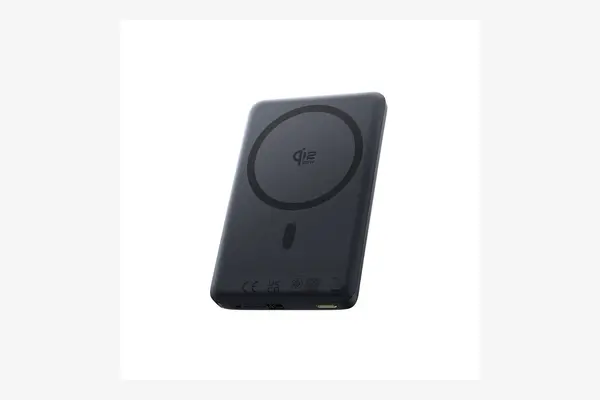
Baseus PicoGo AM52 (Qi2.2, 10K)
Around $70 to $80
If you want a bank that snaps to the back of a recent iPhone and charges while you keep using it, this is the current pick. It runs the newer Qi2.2 standard at 25 watts wireless, faster than the older magnetic banks, with a 45-watt USB-C port for wired charging when you want full speed. It is slim at around 200 grams and ran cooler than rivals in independent testing. Wireless charging is always lossy, so you get less of the 10,000mAh back than over a cable, but the convenience of no cable at all is the whole point.
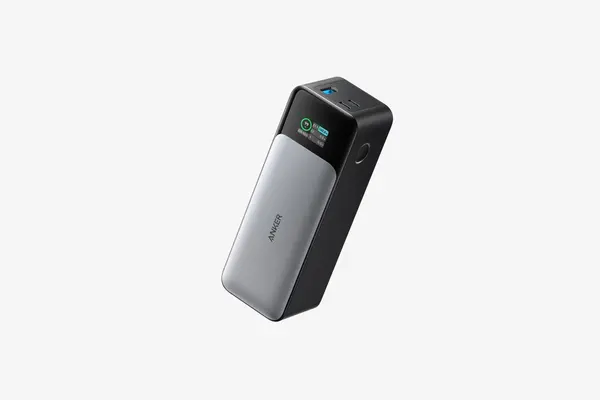
Anker 737 Power Bank (24K, 140W)
Around $100 to $130
The 737 is the do-everything bank: a tough build, 140 watts of bidirectional power across two USB-C ports and a USB-A, and an OLED readout. That 140 watts means it both charges a laptop quickly and refills itself fast, so it is not stuck on the charger for hours. At 24,000mAh it stays flight-legal under 100 watt-hours. It is brick-shaped and heavy, and the lone USB-A port feels dated against newer all-USB-C designs, but as a single bank for a bag of mixed devices it is the most flexible here.
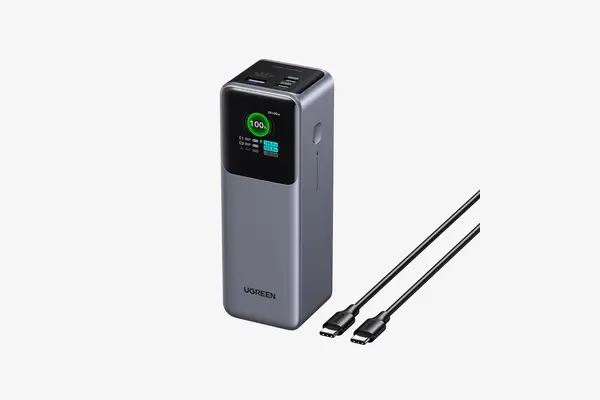
UGREEN Nexode (25K, 200W)
Around $91 to $130
For travelers who want as much capacity as they can carry without triggering airline approval, the Nexode threads the needle. At 25,000mAh it sits around 90 watt-hours, just under the 100 limit, and pushes 200 watts total, with a top USB-C port rated to 140 watts that genuinely charges a laptop and a second at 100 watts to feed two at once. A detailed display reports voltage, current, and wattage. It is chunky and gives roughly one and a third laptop charges, since it is near the legal ceiling, not above it, but it is the most capacity you can fly with hassle-free.
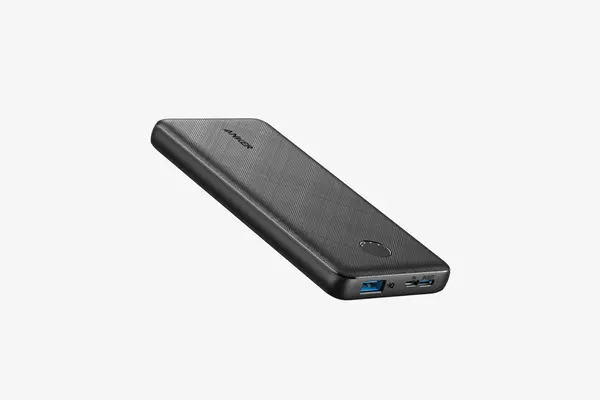
INIU 10K (45W) or Anker 313
Around $26 to $40
Not every bank needs a screen and 200 watts. For a cheap, reliable spare to leave in a bag or lend out, a basic 10,000mAh pack does the job. The INIU 10K is the value pick to buy new: 45-watt output that charges a phone quickly, about 182 grams, and a long warranty. The even cheaper Anker 313 is around $26 but tops out near 18 watts and has no display, so it is slower. Pick the INIU if you want speed for a few dollars more; pick the Anker 313 if rock-bottom price is the only goal.
Compared on the numbers
| Power bank | Capacity | Max output | Flight-legal? | Price (Jun 2026) |
|---|---|---|---|---|
| Anker Prime 27,650 | 99.5Wh | 250W | Yes (under 100Wh) | ~$150-180 |
| Anker Nano 10K | 10,000mAh | 30W | Yes | ~$30-50 |
| Baseus PicoGo AM52 | 10,000mAh | 45W wired | Yes | ~$70-80 |
| Anker 737 (24K) | 86.4Wh | 140W | Yes | ~$100-130 |
| UGREEN Nexode 25K | ~90Wh | 200W | Yes (near limit) | ~$91-130 |
| INIU 10K / Anker 313 | 10,000mAh | Up to 45W | Yes | ~$26-40 |
Frequently asked questions
Yes, in your carry-on, never in checked luggage. A bank up to 100 watt-hours, around 27,000mAh, needs no airline approval, which covers every pick in this guide. From 100 to 160 watt-hours you need the airline's approval and can carry at most two. In 2026 several US airlines added rules requiring banks to stay within reach rather than in the overhead bin and banning charging them during the flight, so check your carrier and make sure the watt-hour rating on the bank is still readable.
Because the rated capacity is measured at the cell's low voltage, and charging your phone steps that voltage up, which loses energy as heat. In practice you get back about 65 to 85 percent of the printed number, so a 10,000mAh bank delivers closer to 6,500 to 7,500mAh. Wireless charging loses even more. It is normal, not a faulty bank, and it is why you should size up slightly from the bare math.
Match it to charges, not to the biggest number. A 10,000mAh bank gives roughly one and a half to two full phone charges and stays pocketable, which is plenty for a day out. A 20,000mAh bank gives three to four and can top up a tablet, for travel or multi-day use, but it is heavier and pricier. If you want to charge a laptop, look at the wattage first, 65 watts or more over USB-C, then the capacity.
For recent iPhones, it is a real convenience: the bank snaps to the back and charges while you keep using the phone, with no cable to manage. The current standard, Qi2.2, has pushed wireless speed up to around 25 watts on banks like the Baseus PicoGo. The catch is that wireless charging is less efficient than a cable, so you get fewer charges out of the same capacity. Buy one if cable-free top-ups matter to you; use the wired USB-C port when you want full speed.
Charging a laptop: the Anker Prime, or the lighter Anker 737. Everyday phone carry: the Anker Nano 10K. iPhone, cable-free: the Baseus PicoGo AM52. Maximum capacity you can still fly with: the UGREEN Nexode. A cheap spare: the INIU 10K. Size to your real day, check the wattage if a laptop is involved, and keep it under 100 watt-hours so it always flies.