


Where does the extra money go once every TV on the shelf is already good? That is the real question in 2026, because the gap between a $530 mini-LED and a $3,400 OLED is no longer the gap between bad and good. It is the gap between very good in a bright room and flawless in a dark one, between solid gaming and the most responsive panel you can put a console on. The six picks below are ranked by who each one is for, weighed on brightness, black level, gaming, and price per inch.
Start with the room. A dark home theater where picture quality is everything points to the LG G6 OLED. A living room full of windows, where the screen doubles as wall art, points to the glare-beating Samsung S95H QD-OLED. The LG C6 is the sensible middle for OLED black levels without flagship money. Bright rooms and daytime sports favor raw brightness, so the mini-LED TCL QM8L and Hisense U8QG out-punch OLED on nits for less. And when the budget leads, the TCL QM6K brings a genuine mini-LED panel from around $530. Flagship OLED runs roughly $2,700 to $3,400 at 65 inches; capable mini-LED starts near $530.
How we ranked, and the OLED vs mini-LED split
The ranking weighs four things: peak brightness, which decides how an HDR image looks in a lit room; black level and contrast, where OLED's self-lit pixels still win outright; gaming, meaning refresh rate, variable refresh support, and input lag; and price per inch, because a TV that costs twice as much rarely looks twice as good. Those reads draw on the figures each maker publishes, then check them against lab testing from outlets such as RTINGS wherever that data exists, not a showroom glance, since a wall of TVs in a bright store flatters the brightest panel and punishes the one with the best black. That showroom trap is exactly what our team ranks around, judging each set by the room it will live in rather than the store it sells in.
The split that matters is OLED versus mini-LED. OLED lights each pixel individually, so black is truly off and contrast is perfect, but the whole panel tops out lower in sustained full-screen brightness. Mini-LED uses thousands of tiny backlights behind an LCD layer, so it can go searingly bright, but light bleeds slightly around bright objects on a black field, the effect called blooming. In a dark room OLED is the clear answer. In a sunny room, or for daytime sports, a bright mini-LED can be the better watch. Neither is universally correct, which is the whole reason this list is sorted by room and use rather than a single trophy.
The OLED picks
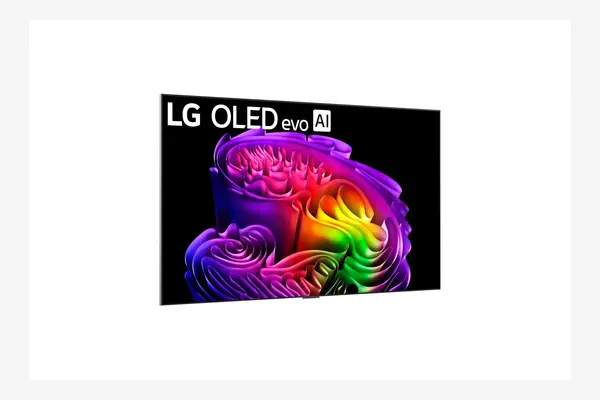
LG G6 OLED
Around $2,499 to $6,499 across 55 to 83 inches as of May 2026; the 65-inch lists near $3,399, confirm current price
The G6 is for the person who wants the best image in the house and watches with the lights down. Its new four-layer Primary RGB Tandem panel pushes peak brightness LG rates near 3,000 nits, a real step over last year's G-series, which is what makes this OLED finally credible in a brighter room too. Black is perfect, color is rich, and gaming is fully covered with four HDMI 2.1 ports, 4K up to 144Hz, and variable refresh support. The one tradeoff is plain: you are paying flagship money, and for a dark home theater the cheaper C6 gets you most of the way there.
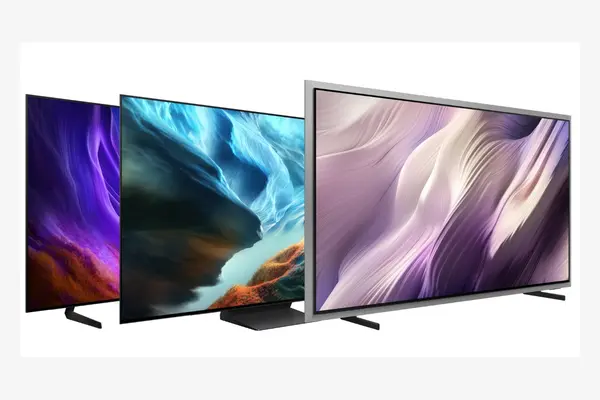
Samsung S95H QD-OLED
Around $2,499 to $6,499 across 55 to 83 inches as of May 2026; the 65-inch lists near $3,299, confirm current price
The S95H is the pick when the room has windows. Its QD-OLED panel runs among the brightest OLEDs you can buy, Samsung rates it up to roughly 3,000 nits, and its matte Glare Free coating scatters reflections so daytime viewing keeps its contrast instead of washing out. It doubles as decor too, with the slim FloatLayer frame and the Art Store. Gaming is excellent: every size hits 165Hz with FreeSync and G-Sync support across four HDMI 2.1 ports. The catch is Samsung's longstanding one, no Dolby Vision HDR, so Dolby Vision titles fall back to HDR10+ instead.
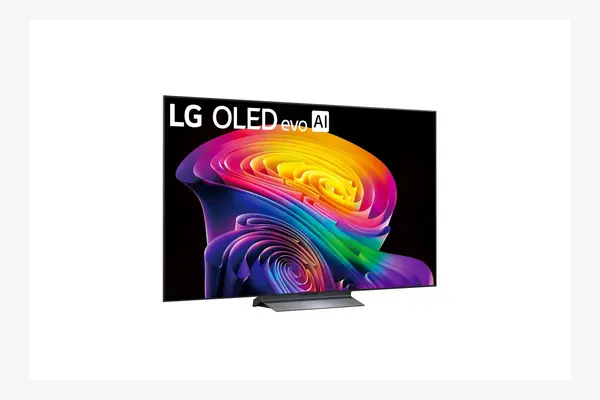
LG C6 OLED
Around $1,399 to $2,699 across 42 to 65 inches as of May 2026, lower as the year goes on, confirm current price
The C6 is the OLED most people should actually buy. It keeps the things that make OLED worth it, perfect black, infinite contrast, reference-grade color, and the same gaming kit as the flagship: four HDMI 2.1 ports, 144Hz with headroom to 165Hz, and full variable refresh. It also comes in a 42-inch size that doubles as a desk monitor. What you give up versus the G6 is peak brightness; the standard C6 panel does not chase the flagship's daylight nits, so in a sunlit room it is the one pick here that can look a touch dim. In a dark room you would struggle to tell them apart.
The mini-LED picks
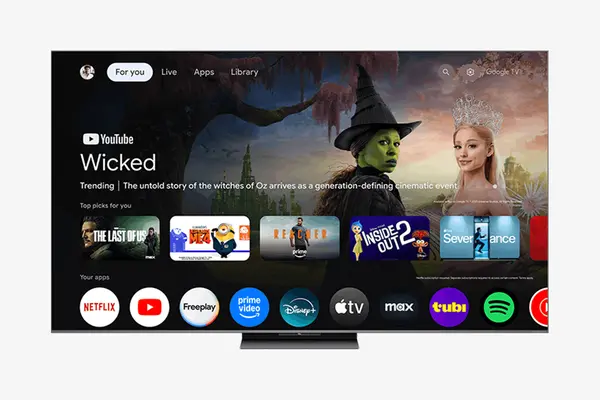
TCL QM8L
Around $1,999 to $2,499 for the 65-inch as of May 2026, often less on sale, confirm current price
The QM8L is for the person who wants the most light on screen and watches sports or HDR in a bright room. Its SQD mini-LED backlight runs thousands of dimming zones, TCL quotes up to 4,000 on the larger sizes, and pushes peak brightness far past any OLED here, which makes daytime HDR genuinely pop. Gaming is a strength: all four HDMI 2.1 ports do 4K at 144Hz with variable refresh, and it reaches 1080p at 288Hz for a PC. The tradeoff is the mini-LED one, in a dark room you will see faint blooming around bright objects on black that an OLED simply does not have.
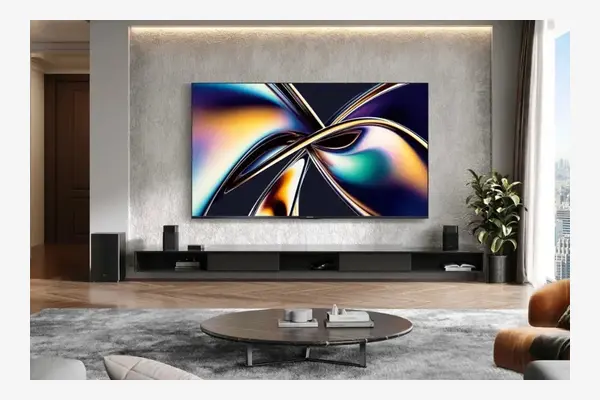
Hisense U8QG
Around $1,489 for the 65-inch as of May 2026, down sharply from launch, confirm current price
The U8QG undercuts the QM8L and delivers most of the same brightness story for hundreds less. Hisense rates peak brightness near 4,000 nits across roughly 2,000 dimming zones, with great contrast for the money and an anti-reflective screen that handles a lit room well. For gamers it is arguably the standout value here: a native 165Hz panel, low input lag measured under 10ms at 4K, plus a USB-C input that carries DisplayPort for a PC. The tradeoff is consistency, fewer dimming zones than the QM8L mean blooming is a little more visible, and Hisense's processing and motion handling sit a step behind the pricier sets.
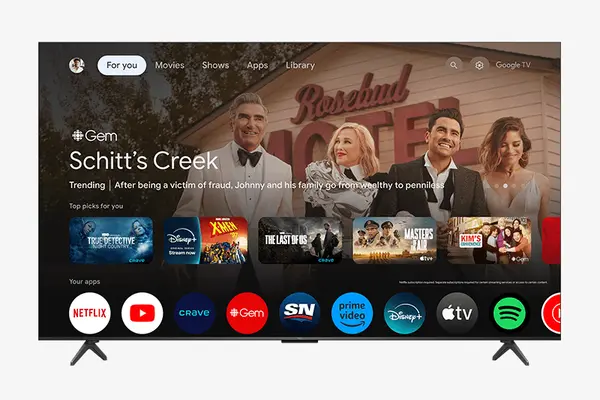
TCL QM6K
Around $530 to $700 for the 65-inch as of May 2026, regularly near $530 on sale, confirm current price
The QM6K is the pick when the budget sets the brief. It is a real QD mini-LED panel, not a plain LED set, with a 144Hz native refresh and quantum-dot color, for the price plenty of brands still ask for a basic TV. For movies and gaming at 65 to 75 inches it is the most picture per dollar on this list. The tradeoffs are where the cost came out: it runs around 500 dimming zones on the 65-inch, far fewer than the U8QG or QM8L, so blooming is more obvious in a dark room, and it is not as bright, which makes it a weaker choice for daytime sports. For most rooms and most wallets, none of that breaks the deal.
The gap between a $530 mini-LED and a $3,400 OLED is no longer bad versus good. It is very good in daylight versus flawless in the dark.
Compared on the numbers
| TV | Type | Peak HDR | Refresh | 65" price (May 2026) |
|---|---|---|---|---|
| LG G6 | OLED (RGB Tandem) | ~3,000 nits | 144Hz | ~$3,399 |
| Samsung S95H | QD-OLED | ~3,000 nits | 165Hz | ~$3,299 |
| LG C6 | OLED (WOLED) | Lower than G6 | 144Hz | ~$2,699 |
| TCL QM8L | Mini-LED (SQD) | Highest here | 144Hz | ~$1,999-2,499 |
| Hisense U8QG | Mini-LED | ~4,000 nits | 165Hz | ~$1,489 |
| TCL QM6K | Mini-LED (QD) | Lowest here | 144Hz | ~$530-700 |
Frequently asked questions
It depends on your room. OLED lights every pixel on its own, so black is truly off and contrast is perfect, which makes it the clear pick for a dark room. Mini-LED goes far brighter, so it holds up better in a sunlit room and for daytime sports, but you will see faint blooming around bright objects on black. There is no single winner, only the better match for where the TV lives and what you watch.
All six handle gaming well, but the standouts are the Samsung S95H and Hisense U8QG for their native 165Hz panels with variable refresh, and the U8QG adds input lag measured under 10ms plus a USB-C DisplayPort input for a PC. The TCL QM8L reaches 1080p at 288Hz for PC players. Every pick on this list has four HDMI 2.1 ports and runs 4K at 120Hz or higher, so any console is well served.
No. A capable mini-LED set like the TCL QM6K starts around $530 at 65 inches and gives you quantum-dot color and a 144Hz panel. Spending more buys OLED's perfect black and contrast, far higher brightness, or more dimming zones with less blooming, not a basic jump from bad to good. The premium tier is about the last refinements, so match the spend to your room and how much daylight it gets.
Samsung does not support Dolby Vision on its TVs, including the S95H, and instead backs the rival HDR10+ format. In practice a Dolby Vision title falls back to standard HDR10 on a Samsung set rather than failing to play. Whether that matters depends on what you watch, since some streaming and disc content is mastered in Dolby Vision; if that is a priority, the LG OLEDs and the TCL and Hisense mini-LEDs all support it.
Dark room and the best picture, buy the LG G6; bright room with windows, the Samsung S95H; OLED on a sensible budget, the LG C6; brightest image and sports, the TCL QM8L or the cheaper Hisense U8QG; smallest budget, the TCL QM6K from around $530.