


Buy a laptop on its spec sheet and you are trusting a row of best cases. That battery figure came from a dimmed-screen video loop, that brightness peak holds for a few seconds, and that headline clock is a burst the chip cannot keep under load. The numbers are not lies, but they do let two laptops quote the same hours and then feel a workday apart in your hands. What follows ranks seven 2026 laptops by the buyer each one fits, names the single thing every pick asks you to give up, and checks the counts and tiers against the makers' own pages and independent lab tests rather than the marketing line. Sorting by the buyer each machine fits, rather than the benchmark it wins, is what a TrueAction review is for.
Start from what you do, then the pick is short. Doing a bit of everything points to the Apple MacBook Air (M5) from $1,099, which balances weight, silent running, and real battery life better than anything else here. Sustained creative work on macOS is the case for the MacBook Pro 14-inch (M5 Pro), with the XDR screen and held clocks the Air cannot manage. Wanting a polished Windows all-rounder lands on the Dell XPS 14 (2026) from around $1,350, the XPS name back on a tandem-OLED Panther Lake machine. Carrying a work laptop daily favors the Lenovo ThinkPad X1 Carbon Gen 13, the lightest serious machine here at about 2.17 pounds. Chasing OLED without flagship money means the Asus Zenbook 14 OLED (2026), a 120Hz panel from around $1,599. Putting battery first makes it the Lenovo Yoga Slim 7i Ultra Aura from about $1,629. Needing a real GPU you can carry leaves the Asus ROG Zephyrus G14 (2026), RTX 50-series power in a 14-inch body, if the steep price fits.
Why the battery number lies
Read any two battery ratings the way you would read two clocks set to different time zones. Apple rates the MacBook Air (M5) at up to 18 hours of video streaming but only up to 15 hours of wireless web, and the gap between those two figures is the gap between a dimmed playback loop and the way you actually use a laptop. The web number is the one to trust, and it is the number makers print smaller. The same trick runs through the Windows field: the Lenovo Yoga Slim 7i Ultra Aura is rated for huge endurance, yet Tom's Hardware measured it at about 16 hours and 38 minutes on a mixed browse-and-stream test at 150 nits, which is excellent but well short of the headline.
Brightness and chip clocks play the same game. A panel that lists 1,100 nits peak, like the Zenbook 14 OLED and the ROG G14, holds that figure only on a small HDR highlight for a moment, not across a full white page, where it settles far lower. A Panther Lake or Apple chip quotes a boost clock it sustains for seconds before heat pulls it back to a steady state. The fix is simple: judge a laptop by its wireless-web rating, its full-screen sustained brightness, and independent benchmark scores under load, not by the biggest number on the page.
The web rating is the honest battery number. It is also the one the maker prints in the smaller font.
The seven laptops
For most people

Apple MacBook Air 13-inch (M5)
around 1,099 to 1,499 dollars as of May 2026, $1,099 for M5 with 16GB and 512GB, more for 24GB or 32GB memory
The M5 Air is the laptop to recommend to almost anyone, because it gets the fundamentals right and stays quiet doing it. It is fanless, so it runs silent under everyday load, weighs 2.7 pounds, and Apple rates it at up to 15 hours of wireless web, the figure that matches real use better than the 18-hour video number. The M5 chip handles browsing, office work, photo edits, and code with room to spare, and the base config now starts at 16GB of memory and a 512GB SSD. The honest tradeoff is the screen and the ceiling: it is a 60Hz 500-nit Liquid Retina LCD, not the 120Hz XDR panel of the Pro, and because it is fanless, long sustained exports throttle in a way the Pro does not. For the work most people do, neither limit will bite.
For creative pros on macOS
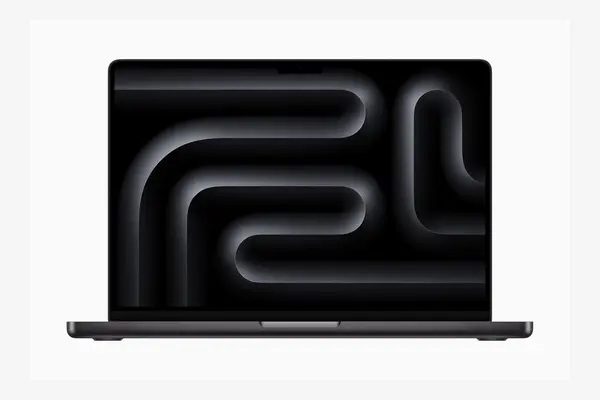
Apple MacBook Pro 14-inch (M5 Pro)
around 2,199 to 2,999 dollars as of May 2026 for M5 Pro configurations, with the entry M5 14-inch starting near $1,699
The 14-inch Pro is the one to buy only if you need what the Air cannot do, and if you do, it answers cleanly. It has a fan and active cooling, so the M5 Pro chip holds its clocks through long video exports and compiles instead of throttling. The Liquid Retina XDR display runs at 120Hz with adaptive ProMotion, 1,000 nits sustained full-screen, and 1,600 nits peak in HDR, a genuinely better panel than the Air's, and it adds three Thunderbolt 5 ports, HDMI, and an SDXC slot. Apple rates the M5 Pro at up to 14 hours of wireless web. The tradeoff is weight and money: it is 3.5 pounds versus the Air's 2.7, and the M5 Pro starts near $2,199, roughly double the Air, for power most people will never load. Buy it for sustained pro work, not for status.
For a Windows premium all-rounder
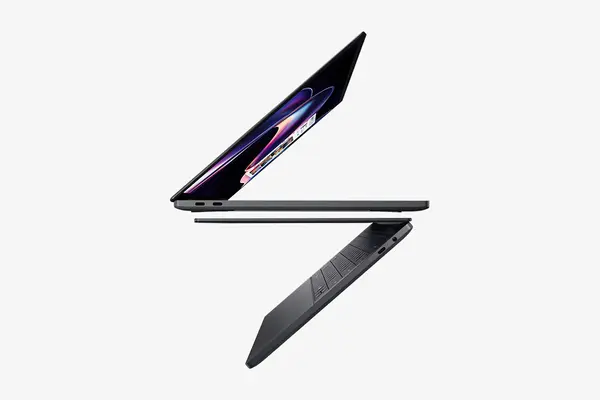
Dell XPS 14 (2026)
around 1,350 to 2,000 dollars as of May 2026, $1,350 for Core Ultra 5 325 with 16GB and 512GB, rising with the OLED panel and faster chips
Dell put the XPS name back on the 14-inch flagship for 2026, and the machine underneath earns it. It runs Intel's new Panther Lake chips, from a Core Ultra 5 325 base up to a Core Ultra X7 358H with the Arc B390 integrated graphics, and offers a 2.8K tandem OLED touch panel or a 1920x1200 IPS screen for buyers who want more battery and less glare. Dell fitted a larger 70Wh battery, and Notebookcheck measured about 15 hours and 38 minutes in the PCMark 10 Modern Office test at 150 nits, strong for a premium 14-inch. The tradeoff is configuration math: the $1,350 entry price is the IPS, mid-spec machine, and the OLED, higher-chip builds you actually want push past $2,000 fast. For a Windows laptop that feels as considered as a MacBook, it is the one to start with.
For business and travel
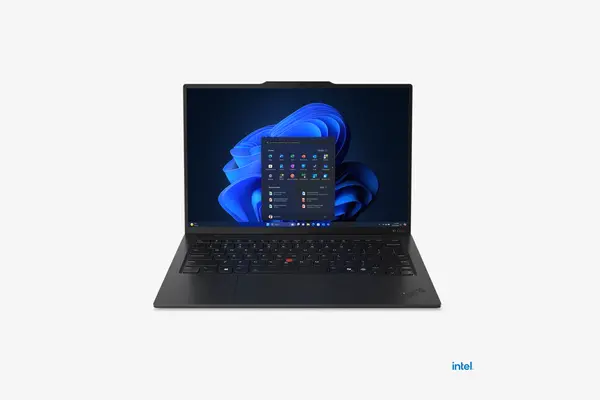
Lenovo ThinkPad X1 Carbon Gen 13
around 1,700 to 2,400 dollars as of May 2026 depending on chip, screen, and memory, confirm current price and any business discount at checkout
The X1 Carbon Gen 13 is the pick for people who carry a laptop to work every day and want it to disappear into the bag. At about 2.17 pounds on the Lunar Lake build, it is the lightest serious work machine here, with the ThinkPad keyboard, a MIL-spec carbon-fiber and magnesium chassis, and the full business kit of vPro options, a fingerprint reader, and a webcam shutter. It comes with a WUXGA IPS panel or an OLED, and Notebookcheck measured the OLED at about 545 nits, bright enough for most offices. The tradeoff is value and battery against the field: it is configured for fleets, so list prices run high before discounts, and the OLED build trades a little runtime for its contrast. For travel and managed work, the weight and keyboard still win.
For OLED on a budget
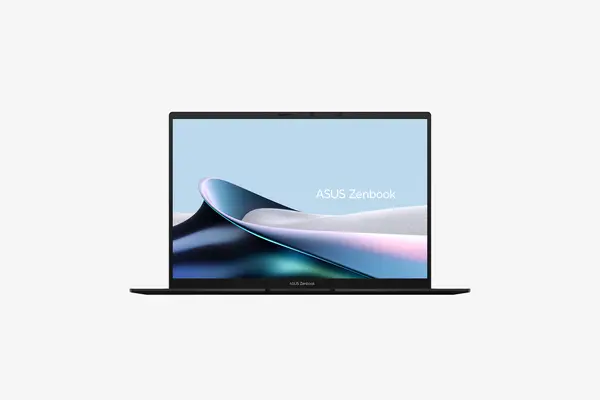
Asus Zenbook 14 OLED (2026)
around 1,599 to 1,999 dollars as of May 2026 for Core Ultra 7 356H or Ultra 9 386H builds with 32GB and 1TB, confirm current configuration pricing
The 2026 Zenbook 14 is the value answer for anyone who wants an OLED ultraportable without paying flagship money. It pairs Panther Lake chips, the Core Ultra 7 356H or Ultra 9 386H, with a 2.8K 120Hz OLED panel rated at up to 1,100 nits peak in HDR, and it weighs about 1.2 kg, roughly 2.65 pounds, on a 72Wh battery. That is a lot of laptop for the price, and the OLED screen alone outclasses the LCD panels on cheaper machines. The tradeoff is the peak-brightness asterisk and sustained power: the 1,100 nits is an HDR-highlight figure, not what a full white page holds, and the thin chassis limits how long the H-series chip sustains its top clocks under heavy load. For browsing, office work, and media on a sharp screen, it is the standout for the money.
For long battery in a convertible
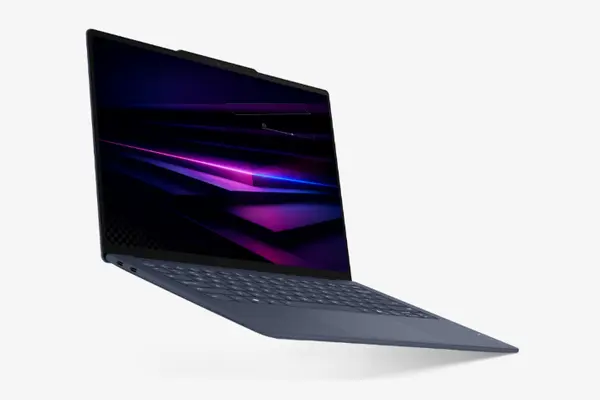
Lenovo Yoga Slim 7i Ultra Aura (2026)
around 1,629 to 1,889 dollars as of May 2026 depending on chip and storage, confirm current price at checkout
The Yoga Slim 7i Ultra Aura is the pick for buyers who put battery life first and want a thin, light machine to go with it. It runs Panther Lake chips, up to a Core Ultra X9 388H, on a 75Wh battery that Tom's Hardware clocked at about 16 hours and 38 minutes on a mixed browse-and-stream test, among the longest real-world results in this group. It carries a 14-inch 2.8K 120Hz OLED touch panel and weighs about 2.15 pounds, the lightest Windows pick here. The tradeoff is the headline-versus-tested gap and the chassis: Lenovo's PCMark figure runs past 18 hours, well above the mixed-use result, and the slim body caps sustained performance against a thicker laptop. For a long unplugged day on a bright screen, it is hard to beat.
For gaming and GPU work
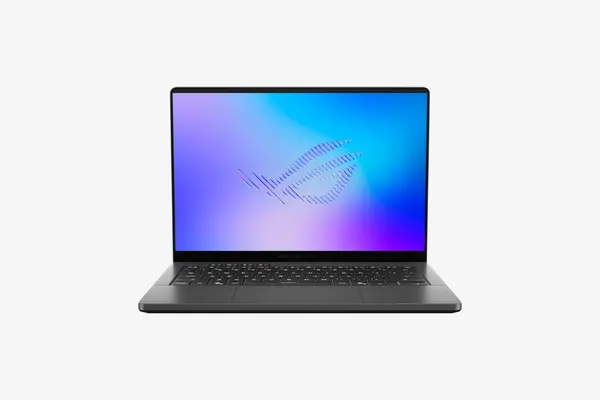
Asus ROG Zephyrus G14 (2026)
around 3,600 dollars as of May 2026 for the RTX 5070 Ti and Core Ultra 9 386H build, with cheaper RTX 5070 and pricier RTX 5080 versions in the line
The 2026 Zephyrus G14 is the pick when you want a real GPU in a body you can still carry. It pairs an Intel Core Ultra 9 386H with Nvidia RTX 50-series graphics, the RTX 5070, 5070 Ti, or 5080, on a 14-inch 3K 120Hz OLED panel, in a chassis around 1.5 kg, roughly 3.3 pounds. That is desktop-class gaming and CUDA work in an ultraportable footprint, and the OLED screen is excellent for creative work between games. The tradeoffs are price and the GPU power ceiling: the RTX 5070 Ti config lands near $3,600, far above every other laptop here, and the GPU runs at about 100W plus 15W dynamic boost, less than a thicker 16-inch rig can feed, so you trade some sustained frame rate for the small size. The 73Wh battery also drains fast under load. For portable power, it is the one.
Specs side by side
| Laptop | Starting price | Chip | Display | Battery (best figure) | Weight |
|---|---|---|---|---|---|
| Apple MacBook Air 13-inch (M5) | $1,099 | Apple M5 | 13.6-inch 60Hz LCD, 500 nits | 15h wireless web (rated) | 2.7 lb |
| Apple MacBook Pro 14-inch (M5 Pro) | ~$2,199 | Apple M5 Pro | 14.2-inch 120Hz XDR, 1600 nits peak | 14h wireless web (rated) | 3.5 lb |
| Dell XPS 14 (2026) | ~$1,350 | Intel Panther Lake | 14-inch 2.8K OLED or IPS | ~15.5h PCMark (tested) | ~3.7 lb |
| Lenovo ThinkPad X1 Carbon Gen 13 | ~$1,700 | Lunar / Arrow Lake | 14-inch OLED or WUXGA IPS | Long, IPS beats OLED | 2.17 lb |
| Asus Zenbook 14 OLED (2026) | ~$1,599 | Intel Core Ultra 7/9 H | 14-inch 2.8K 120Hz OLED | 72Wh cell | ~2.65 lb |
| Lenovo Yoga Slim 7i Ultra Aura | ~$1,629 | Intel Panther Lake | 14-inch 2.8K 120Hz OLED touch | ~16.6h mixed (tested) | 2.15 lb |
| Asus ROG Zephyrus G14 (2026) | ~$3,600 | Core Ultra 9 386H + RTX 50-series | 14-inch 3K 120Hz OLED | 73Wh, short under load | ~3.3 lb |
Frequently asked questions
For most people it is the Apple MacBook Air (M5) from $1,099, because it is light, fanless and silent, and its 15-hour wireless-web rating holds up in real use. If you do sustained creative work on macOS, the MacBook Pro 14-inch (M5 Pro) adds the cooling, the 120Hz XDR screen, and the ports the Air lacks. On Windows, the Dell XPS 14 (2026) from around $1,350 is the premium all-rounder, the ThinkPad X1 Carbon Gen 13 is the lightest business pick, and the Asus Zenbook 14 OLED from around $1,599 is the value OLED choice.
Only if your work loads the chip for long stretches. The Air is fanless, so under a long video export or heavy compile it throttles, while the MacBook Pro (M5 Pro) has active cooling and holds its clocks. The Pro also adds a 120Hz Liquid Retina XDR screen with 1,000 nits sustained and 1,600 nits peak, three Thunderbolt 5 ports, HDMI, and an SDXC slot. But it starts near $2,199 against $1,099 for the Air, and it weighs 3.5 pounds versus 2.7. For browsing, office work, photo edits, and code that runs in bursts, the Air is the smarter buy and the money is better kept.
Because makers quote a best case. The headline figure is usually a dimmed video-streaming loop, the lightest possible load, while the wireless-web rating is closer to real use and the number you should trust. Apple, for example, rates the MacBook Air (M5) at up to 18 hours of video but only up to 15 hours of wireless web. Independent labs measure mixed use, which is harder still: Tom's Hardware clocked the Yoga Slim 7i Ultra Aura at about 16 hours 38 minutes on a browse-and-stream test, below Lenovo's own PCMark figure. Compare laptops by their web ratings and independent mixed-use results, not the biggest number on the box.
Among the picks here, the Asus ROG Zephyrus G14 (2026) is the gaming and GPU-work choice. It pairs an Intel Core Ultra 9 386H with Nvidia RTX 50-series graphics, the RTX 5070, 5070 Ti, or 5080, on a 14-inch 3K 120Hz OLED screen in a roughly 3.3-pound body. That is real gaming power you can carry. Two things to weigh: the RTX 5070 Ti build costs around $3,600, far more than any other laptop on this list, and the GPU runs at about 100W in this thin chassis, less than a larger 16-inch laptop can feed, so a bigger rig will hold higher sustained frame rates for the same GPU.
For comfortable everyday use, target 16GB of memory and a 512GB SSD as the floor, which is now where the MacBook Air (M5) starts. 16GB handles many browser tabs, office apps, and light creative work without swapping to disk. Step up to 24GB or 32GB only if you run virtual machines, large photo and video projects, or heavy multitasking, since on Apple silicon memory cannot be added later and on most thin Windows laptops it is soldered too. For storage, 512GB suits most people, and 1TB is worth it if you keep large media libraries or game locally. Buying the memory you need at purchase is cheaper than regretting it, because you usually cannot upgrade it.
Start from the work in front of you and the right machine follows. If you are most people, the MacBook Air (M5) from $1,099 is the safe center, light and silent. If you do sustained macOS creative work, the MacBook Pro 14-inch (M5 Pro) earns its cooling and XDR screen. For Windows, the Dell XPS 14 (2026) from around $1,350 is the premium all-rounder, the ThinkPad X1 Carbon Gen 13 is the travel and business pick at 2.17 pounds, the Zenbook 14 OLED from around $1,599 is the value OLED, and the Yoga Slim 7i Ultra Aura from about $1,629 is the endurance choice. If you game or run a GPU, the ROG Zephyrus G14 is the one, as long as the near-$3,600 price fits. Judge each on its web battery rating and tested numbers, not the headline.