


Ask what the money buys before you ask which brand. Ten dollars buys a Wi-Fi plug that flips a lamp on a schedule and answers Alexa. Fifteen to twenty buys a Matter plug that joins any ecosystem and reports its power draw to the watt. Thirty to forty buys an Eve plug that runs entirely on your local network with no cloud account at all. The plug itself is almost a commodity now, so the real decision is which job you are solving, on which platform, and whether you already own the hub that several of these quietly require. Here we always name the hub trap before the brand, because that one assumption is where most of the buyer regret starts.
Best overall and most future-proof: Kasa KP125M, a 15A Matter plug with energy monitoring that joins any platform, around $13 to $18 per plug in a four-pack as of February 2026. Best energy and privacy: Eve Energy, Matter over Thread with the most detailed cost reporting and zero cloud, if you already own a Thread border router. Cheapest that works everywhere: Tapo P125M, a Matter plug near $8 to $12 a unit in multipacks. Best budget on a schedule: Wyze Plug, around $7 to $8 each in a two-pack. Alexa-only household: Amazon Smart Plug. Best outdoor: Wyze Plug Outdoor, IP64 with dual outlets and energy data.
First, the part that decides everything: hub, Matter, and Thread
Most buyer regret here is not about a bad plug, it is about a hub assumption that turned out wrong. Three terms settle which plugs even work in your home, so spend two minutes on them before you spend money. A plain Wi-Fi plug needs nothing but your router and the brand app. A Matter plug speaks a shared standard so one device works across Apple Home, Alexa, Google Home, and SmartThings at once. Thread is a separate low-power mesh that a few plugs use instead of Wi-Fi, and it needs a Thread border router in the house.
Kasa, Wyze, Amazon, and Tapo plugs join your 2.4GHz Wi-Fi directly. No separate hub, but they lean on the brand cloud for remote control, and every plug here is 2.4GHz only, so a 5GHz-only network will not see them.
Plugs like the Kasa KP125M and Tapo P125M run Matter on normal Wi-Fi. No border router needed. For remote access and automations you still want a controller you likely already own: an Echo, a HomePod, an Apple TV, or a Nest or SmartThings hub.
The Eve Energy uses Thread, not Wi-Fi. It needs a Thread border router, which is built into a HomePod mini, Apple TV 4K, recent Echo, Nest Hub, or SmartThings Station. No border router, no Eve. Own one and Thread is fast and reliable.
Eve processes everything locally with no account, which is the privacy pick. The Wi-Fi brands route through their cloud, so an outage or a discontinued app can affect remote control. Local control on your own network keeps working regardless.
If you own no smart speaker or hub and just want a lamp on a timer, buy a Wi-Fi plug and skip Matter entirely. If you own any Echo, HomePod, Apple TV, Nest, or SmartThings device, buy a Matter over Wi-Fi plug for the longevity. Only buy the Thread-based Eve if you have already confirmed a Thread border router in the home.
Best Matter plugs: buy once, switch platforms later
Matter is the one feature worth paying a few dollars extra for in 2026, because it is the difference between a plug you can move between ecosystems and one that gets orphaned when you switch phones or speakers. These two are the picks. Both are 15A and 1800W, both are 2.4GHz Wi-Fi, and both are compact enough to leave the second outlet free.
Kasa KP125M, the overall pick
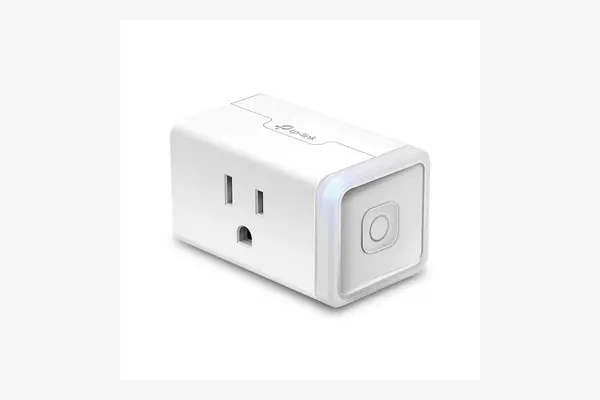
Kasa KP125M (Matter, energy monitoring)
around $13 to $18 per plug in a four-pack as of February 2026, confirm current price
This is the plug to default to. It is Matter-certified, so it joins Apple Home, Alexa, Google Home, and SmartThings through one standard, and it tracks real-time and historical power draw in the Kasa app, which most Matter plugs at this price omit. The compact body lets two stack in a standard duplex outlet. The tradeoffs are honest ones: it is 2.4GHz Wi-Fi only, not Thread, so remote control rides the cloud unless you pair it to a local controller, and energy data shows in Kasa's own app rather than every Matter platform. For nearly everyone, it is the right balance of price, reach, and data.
Tapo P125M, cheapest that works everywhere
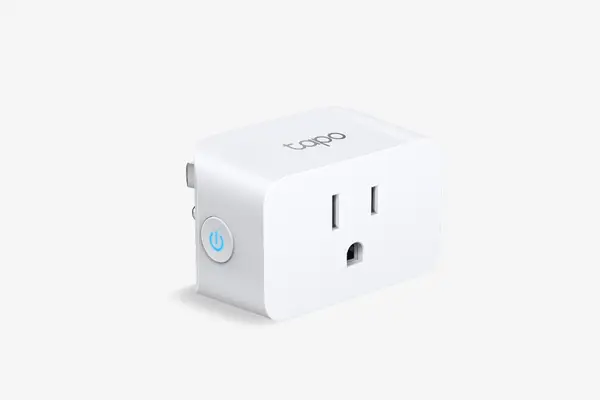
TP-Link Tapo P125M (Matter)
around $8 to $12 per plug in a multipack, near $16 to $17 for a single, as of February 2026
Tapo is TP-Link's value line and the P125M is the cheapest way into Matter. Same 15A and 1800W ceiling as the Kasa, same compact shape, same four-platform Matter support, with a Bluetooth-and-QR setup that pairs in under a minute. What you give up versus the KP125M is energy monitoring, which the base P125M does not include, so if power data matters this is not your plug. If you just want cheap, universal, schedulable switches in volume, it is the best dollar-per-plug here.
Best for energy data and privacy: Eve Energy
If the reason you want a smart plug is to see what an appliance actually costs to run, this is the category that matters, and the answer splits two ways. The Kasa KP125M above already gives you watts and history for around fifteen dollars. The Eve goes further on the data and the privacy, but only earns its higher price in a specific home.
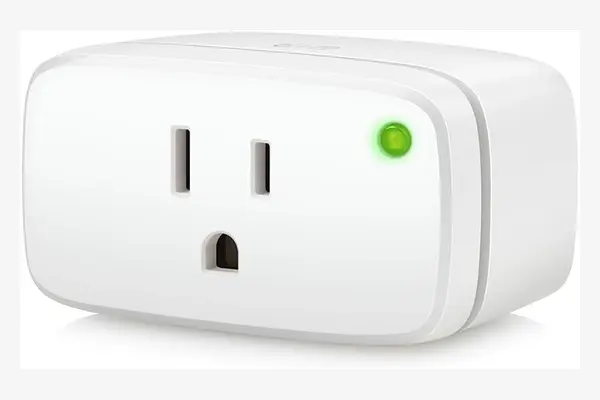
Eve Energy (Matter over Thread)
around $30 to $40 per plug, often near $30 on sale and in two-packs, as of February 2026
Eve makes the most detailed energy and cost projections of anything here, and it does all of it locally with no cloud account, which is the privacy pick by a wide margin. It runs on Matter over Thread, so it is fast and does not load your Wi-Fi, and it works across Apple Home, Alexa, Google Home, and SmartThings. The catch is firm: it is useless without a Thread border router such as a HomePod mini, Apple TV 4K, recent Echo, or Nest Hub, and at roughly double the Kasa's price it only makes sense if you already own that hardware and value the data and privacy. No border router, buy the Kasa instead.
An energy-monitoring plug pays for itself fastest on the things you forget are running: the old beer fridge, the space heater, the gaming PC left on overnight.
Best budget and Alexa-only: spend the least that still works
Not every plug needs Matter or power data. If you have one ecosystem and a simple job, the cheapest reliable switch is the smart buy, and overpaying for a standard you will never use is its own mistake. Two picks cover this: one for mixed Alexa-and-Google homes, one for committed Alexa households.
Wyze Plug, the budget pick
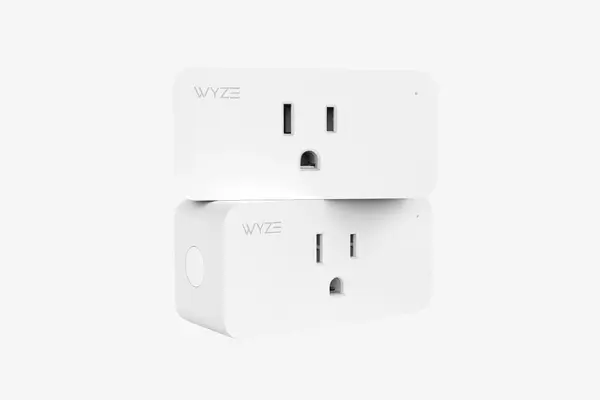
Wyze Plug (indoor)
around $7 to $8 per plug in a two-pack as of February 2026
The Wyze Plug is the cheapest plug here that still behaves like a good one. It is compact enough to leave the second outlet free, responds quickly, handles schedules and automations, and works with both Alexa and Google Assistant, which is more than the similarly priced Amazon plug can say. The compromises match the price: it is 2.4GHz Wi-Fi only, it is not Matter so it stays inside Wyze's app and the two voice assistants, and the base model does not monitor energy. As a set of dumb-to-smart switches for lamps and fans, nothing beats its cost.
Amazon Smart Plug, for Alexa-only homes
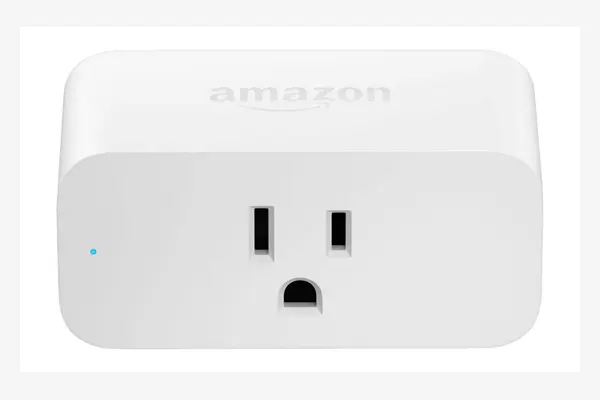
Amazon Smart Plug
around $20 to $25 per plug, sometimes $20 on sale, as of February 2026
This one earns a place only if you are certain you will stay in Alexa's world. Setup is the easiest of any plug here because Alexa recognizes it the moment you plug it in, with no separate app. That is the whole pitch. It does not support Google or Apple, it is not Matter, and it has no energy monitoring, yet it usually costs more than the Wyze and far more than the Tapo. Buy it for the zero-friction Echo setup and nothing else, and only if a single ecosystem is a promise you can keep.
Best outdoor: Wyze Plug Outdoor
Indoor plugs are not rated for rain, so holiday lights, a deck fan, or a pond pump need a weather-sealed unit. One pick stands out for the money.
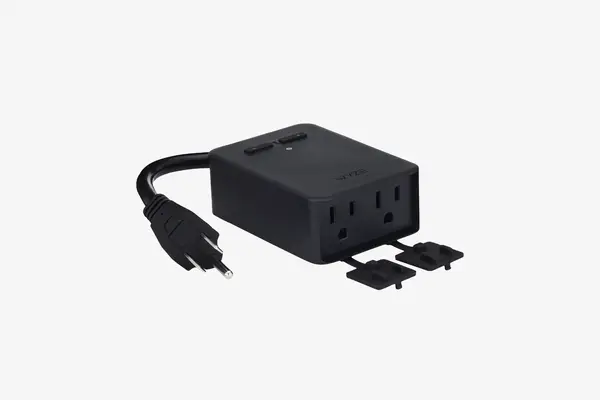
Wyze Plug Outdoor
around $20 to $30 for the single dual-outlet unit as of February 2026, confirm current price
The Wyze Plug Outdoor is an IP64 weather-resistant unit with two independently controlled sockets, so it switches two things at once, and it adds energy monitoring with usage alerts that the indoor Wyze omits. A built-in light sensor can turn outlets on and off by daylight even without Wi-Fi, which is genuinely useful for seasonal lights, and the range holds up well across a yard. Like the rest of the Wyze line it is 2.4GHz only and not Matter, so it lives in the Wyze app plus Alexa and Google. For outdoor duty at this price, it is the obvious pick.
| Plug | Standard | Energy data | Hub needed | Price per plug |
|---|---|---|---|---|
| Kasa KP125M | Matter (Wi-Fi) | Yes | None (controller for remote) | ~$13-18 |
| Tapo P125M | Matter (Wi-Fi) | No | None (controller for remote) | ~$8-12 |
| Eve Energy | Matter (Thread) | Yes, detailed | Thread border router | ~$30-40 |
| Wyze Plug | Wi-Fi only | No | None | ~$7-8 |
| Amazon Smart Plug | Wi-Fi only | No | None (Alexa only) | ~$20-25 |
| Wyze Plug Outdoor | Wi-Fi only | Yes | None | ~$20-30 |
Frequently asked questions
It depends on the type. A plain Wi-Fi plug like the Wyze, Amazon, Kasa, or Tapo needs only your 2.4GHz router and the brand app, no hub. A Matter over Wi-Fi plug also needs no border router, but for remote control and automations you want a controller you likely already own, such as an Echo, HomePod, Apple TV, Nest Hub, or SmartThings hub. Only Thread-based plugs like the Eve Energy strictly require a separate piece of hardware, a Thread border router, which is built into many of those same devices.
For most people in 2026, yes. Matter lets one plug work across Apple Home, Alexa, Google Home, and SmartThings at the same time, so it survives a switch of phone or smart speaker instead of getting orphaned in one brand's app. The premium over a basic Wi-Fi plug is small, often only a few dollars, as the Tapo P125M near eight to twelve dollars shows. The exception is a single-ecosystem home with no plans to change, where a cheaper Wi-Fi plug like the Wyze is the smarter spend.
The common US indoor plugs here, the Kasa KP125M, Tapo P125M, Wyze, and Amazon, are rated to 15 amps and 1800 watts, which covers lamps, fans, coffee makers, space heaters, and most appliances on a standard 120-volt outlet. Do not chain a high-draw device through anything rated lower, and never run a plug above its stated ceiling. For a large window air conditioner or other heavy load, confirm the appliance wattage stays under the plug rating before plugging it in.
Buy the Kasa KP125M for almost everyone, because Matter plus energy monitoring around fifteen dollars a plug is the most plug you can get for the least regret. Drop to the Tapo P125M if you want Matter for less and do not need power data, the Wyze Plug if you want the cheapest reliable switch on Alexa or Google, the Eve Energy if you already own a Thread hub and want serious local energy data, and the Wyze Plug Outdoor for anything that lives outside.