


You are not really choosing a camera, you are choosing a bill. Every doorbell here shoots sharp enough video to recognize a face and read a package label. Where they split is what happens to that footage: Ring and Nest keep your saved clips behind a monthly plan, while Eufy and a wired Wyze let you store them yourself for nothing after the hardware. Over five years that gap is larger than the price difference between any two units on this list, so that is the lens we ranked through.
How we ranked these
At TrueAction we rank smart-home gear by what it costs to keep running, not the sticker on the box, and doorbells are the clearest case of that gap. This is a research-based ranking built from manufacturer spec sheets, current US pricing, and independent testing from outlets like Tom's Guide and Security.org, not a personal install of each unit. The order reflects total cost of ownership over five years, with resolution, field of view, and power options as tiebreakers. A doorbell that costs $180 with no recurring fee beats one that costs $150 plus a plan, because by year two the cheaper-looking one has already pulled ahead on the bill that never stops.
Five-year cost first, picture quality second, install effort third. The subscription is the line item that decides most of these matchups, so we treat the recording plan as part of the price, not an extra. Where a plan is genuinely optional, we say so.
Best with no monthly fee
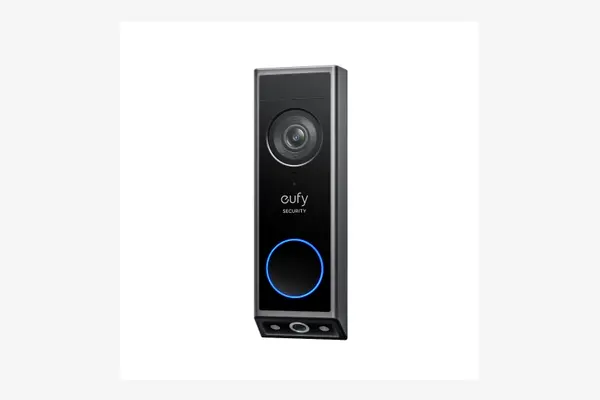
eufy Video Doorbell E340
around 150 to 180 dollars as of May 2026
This is the doorbell that wins the five-year math outright. It records to 8GB of built-in storage with no subscription required, so the only money you spend is the day you buy it. The standout feature is a second, downward-facing camera: the 2K front lens watches the visitor while a 1080p lower lens watches the doormat, which solves the package-on-the-ground blind spot without the fisheye distortion a single wide lens creates. It runs on a removable rechargeable battery or hardwires for constant power, and it works with Alexa, Google, and Apple HomeKit. The tradeoff is that built-in storage caps out, so a busy door eventually overwrites old clips unless you add a HomeBase hub. Cloud backup is optional, not the default.
If the no-fee promise is the whole reason you are here, this is the buy and the rest of the list is academic. The dual-camera head-to-toe view is something Ring and Nest charge more to approximate with a single tall sensor, and Eufy gives it to you while charging nothing to keep the recordings. Verify the current price before ordering, as it dips during sale events.
Best wired and best 4K
Two doorbells split the premium end. One is the best all-rounder if you already live in Google's app and have doorbell wiring; the other is the sharpest battery camera you can buy, for people who want detail and have no wires to work with. Both carry a subscription to get the most out of them, which is exactly why they sit below the Eufy on cost.
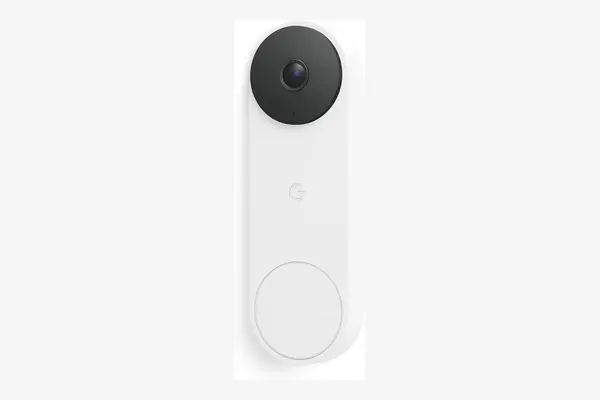
Nest Doorbell (wired, 3rd gen)
around 150 to 180 dollars as of May 2026
The most polished doorbell here if you live in the Google Home app, with 2K HDR video, a tall 166-degree field of view that catches packages on the step, and Gemini-powered alerts that describe what happened instead of just flagging motion, so you get 'a delivery person left a package' rather than a generic ping. The catch is storage. Without a plan it keeps only about the last three hours of events, which is close to useless if you are away for a weekend, so this realistically needs Nest Aware at roughly 8 dollars a month to be worth owning. It is wired-only in the practical sense, so you need an existing 16 to 24 volt doorbell transformer.
Ring Battery Doorbell Pro (2nd Gen)
around 230 to 250 dollars as of May 2026
The sharpest doorbell on the list and the one to pick if you have no wiring and want maximum detail. It shoots Retinal 4K with up to 10x enhanced zoom, true-color night vision, and a head-to-toe field of view, all on a quick-release rechargeable battery that swaps out in seconds so the camera barely goes offline to recharge. It pairs naturally with Alexa. The reasons it sits below the Eufy and Nest are price and the plan: saved clips and package alerts live behind a Ring Home plan starting around 5 dollars a month, and you are paying a clear premium for the 4K sensor. Buy it for the picture quality and the wire-free install, not the value.
Ring also sells the cheaper Battery Doorbell Plus at around 130 to 180 dollars, which drops to 1536p HD+ video but keeps the same 150 by 150 degree head-to-toe view and the same Ring Home plan. If you want Ring's ecosystem and Alexa tie-in but not the 4K premium, the Plus is the sensible Ring to buy. The Pro is for people who specifically want the extra resolution to read plates and faces at distance.
Cheapest that is still good
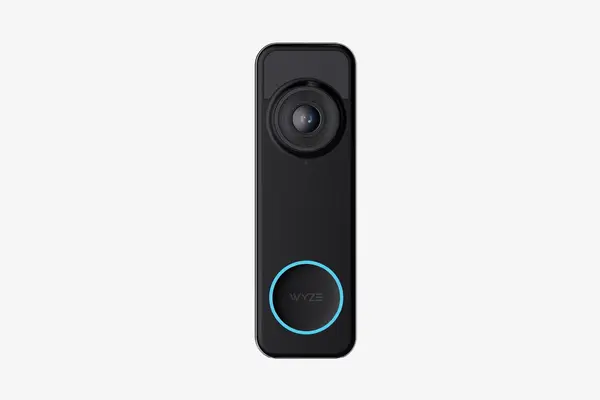
Wyze Battery Video Doorbell
around 50 to 66 dollars as of May 2026
Nothing else gets you this close to the big brands for this little money. It shoots 1536p HD+ in a square 1:1 frame with a 150 by 150 degree head-to-toe view, color night vision, and AI person, vehicle, and package detection, on a USB-C rechargeable battery rated up to six months or hardwired for constant power. The clever part for cost-conscious buyers: hardwire it and add a microSD card up to 256GB, and you get 24/7 local recording with no plan at all, the same no-fee trick Eufy uses, on far cheaper hardware. The catch is that local recording needs wired power, so on battery you lean on Wyze Cam Plus at about 3 dollars a month for full event clips, and Wyze's app and reliability are a step behind Ring and Nest.
Treat the Wyze as the value play with one condition attached: if you can hardwire it and drop in a microSD card, it is astonishing for the money and costs nothing to run. If you cannot wire it, the low sticker price gets partly clawed back by the Cam Plus plan, though at roughly 3 dollars a month it is still the cheapest recurring fee on this list. Confirm the current price, as Wyze frequently discounts this model.
Specs and five-year cost
| Doorbell | Resolution | Field of view | Power | Plan / mo | ~5-yr cost |
|---|---|---|---|---|---|
| eufy E340 | 2K + 1080p dual | Head-to-toe | Battery or wired | $0 local | ~$150-180 |
| Nest (wired, 3rd gen) | 2K HDR | 166° | Wired | ~$8 Nest Aware | ~$630-660 |
| Ring Battery Pro 2nd Gen | 4K | Head-to-toe | Battery | from ~$5 Ring Home | ~$530-560 |
| Ring Battery Plus | 1536p | 150° x 150° | Battery | from ~$5 Ring Home | ~$430-480 |
| Wyze (hardwired + SD) | 1536p | 150° x 150° | Wired | $0 local | ~$50-66 |
| Wyze (battery + Cam Plus) | 1536p | 150° x 150° | Battery | ~$3 Cam Plus | ~$230-250 |
Read that last column twice. The Nest and Ring Pro are excellent cameras, but the plan turns a roughly 180 to 250 dollar device into a 500-to-650 dollar five-year commitment, while the Eufy and a wired Wyze stay flat at the purchase price. That is not a knock on Ring or Nest, their plans buy real features like longer history and richer alerts, it is just the number the boxes do not print.
Every doorbell here records sharp video. The only question that costs real money is who keeps the footage, you or a monthly plan.
Common questions
It depends entirely on the brand. With Ring and Nest, yes in practice: without a plan they show live video and send alerts, but saved clips and useful history are gated, and Nest in particular keeps only about the last three hours for free. With Eufy you never need one, because clips record to built-in storage. A hardwired Wyze with a microSD card also avoids the fee. So the honest answer is that the subscription is optional on the hardware that was designed around local storage, and close to mandatory on the hardware that was designed around the cloud.
If you have an existing doorbell transformer, wired is the better experience: constant power, faster motion response, no recharging, and on Wyze it unlocks free local recording. Battery wins on flexibility, installing in about fifteen minutes anywhere with no electrical work, and modern packs last roughly two to six months depending on traffic before a quick recharge. The real downside of battery is that some models shorten clips or trim pre-roll to save power. Choose wired if you can; choose battery if your door has no wiring or you rent.
Up to a point. The jump from 1080p to 1536p or 2K is genuinely useful, it is the difference between guessing at a face and recognizing one, and reading a package label across the porch. The jump from 2K to 4K matters far less for a fixed camera a few feet from the visitor, and mostly pays off if you want to digitally zoom into a license plate or a face at the edge of the yard. For most doors, a sharp 1536p or 2K camera with a tall head-to-toe field of view beats a 4K camera with a narrow view.
It describes a tall, near-square field of view that shows a visitor from face to feet and, critically, the ground right in front of your door where packages get left. A standard wide doorbell can miss a box set against the wall below it. You want some version of this if package delivery is a real concern, and there are two ways to get it: a tall single sensor like Ring's and Wyze's 150 by 150 degree view, or Eufy's two-camera approach where a dedicated lower lens watches the doormat. Both work; the dual camera avoids the slight fisheye stretch a single wide lens adds.
Let your door and your billing tolerance decide. For the lowest five-year cost and a true head-to-toe view, the eufy E340 wins outright with no plan to feed. For the best wired all-rounder in a Google home, the Nest Doorbell 3rd gen, accepting Nest Aware is part of the price. For the sharpest picture with no wiring, the Ring Battery Doorbell Pro 4K, paid for in resolution and plan. For the smallest budget, a hardwired Wyze with a microSD card, which costs less than fifty dollars to run for five years. Match the pick to your door and your tolerance for a recurring bill, and the choice makes itself.