


Walk into any showroom in 2026 and the wall of TVs is louder than helpful. OLED, QLED, Neo QLED, mini-LED, QD-OLED, all lit to maximum in a fluorescent-bright room that flatters exactly one of them. So ignore the labels for a second. There are only two ways a flat-panel TV makes light. Either each pixel produces its own (that is OLED), or a layer of LEDs behind the screen shines through a panel that colors and blocks the light (that is every LCD, which includes QLED and mini-LED). That difference is the whole story, and the right answer depends almost entirely on the room the TV will live in. TrueAction weighed every set here against that one question first, the room, and let the spec sheet argue second.
For a dark or dim room and anyone who cares most about movies, OLED is the better picture, full stop: perfect black, infinite contrast, no halo around bright objects. For a bright, sunny room, a lot of daytime sport, or a worry about static logos, a mini-LED set (Samsung calls its version Neo QLED) gets far brighter, costs less, and carries no burn-in concern. The middle ground, QD-OLED, is OLED that fights back on brightness and color, for flagship money. Match the tech to the light in the room and you will not regret it.
What you are actually paying for
Strip the marketing away and a TV is a light source plus a color layer. The three terms you keep seeing are just different combinations of those two, and knowing which is which tells you most of what you need before any review.
Self-lit pixels. Each one makes its own light and switches fully off for true black. Two flavors: WOLED (the LG-style panel in most OLEDs) and QD-OLED (Samsung and Sony, quantum dots for richer color and more brightness).
An LCD with a quantum-dot layer for better, brighter color. Still lit by a backlight, so black is really very dark gray. A marketing name, not a separate technology from LCD.
A QLED whose backlight is split into thousands of tiny zones that dim independently. The closest LCD gets to OLED contrast. Samsung sells this as Neo QLED; most brands just call it mini-LED.
So mini-LED is not a rival to QLED, it is a better version of it, and QD-OLED is not a rival to OLED, it is a brighter branch of it. The genuine fork in the road is the first one: self-lit pixels, or a backlight. That is what the rest of this guide is about. The caveat to keep in mind from the start is that a great mini-LED can beat a mediocre OLED, so the tier of the set matters as much as the letters on the box.
Black levels and contrast
This is the argument OLED wins outright, and it is not close. When an OLED needs a pixel to be black, it turns that pixel off. Zero light. The result is perfect black and effectively infinite contrast, which is why a starfield, a night scene, or white text on a black background looks the way it does on OLED and on nothing else. There is no glow, no haze, no grayish wash in a dark room.
A backlit set cannot do that, because the backlight is always on behind the panel and the liquid-crystal layer can only block so much of it. Mini-LED narrows the gap dramatically by carving the backlight into thousands of independently dimmed zones, so a dark area of the screen can have its local lights turned almost all the way down. It gets you most of the way to OLED black in a bright room. What it cannot fully escape is blooming, a faint halo around a bright object on a dark background, like subtitles or a streetlamp, because a dimming zone is still larger than a single pixel. Plain QLED with few or no zones is worse again, with obvious gray in dark scenes.
Black-level superiority only shows itself when the room is dim. In a sun-filled living room at noon, screen glare and ambient light wash out the deep blacks you paid for, and a brighter mini-LED can look better to your eye despite the weaker contrast on paper. Contrast is an evening virtue.
Brightness and the room
Here the backlit sets answer back, and 2026 made the fight closer than ever. Brightness matters for two things: punchy HDR highlights, and fighting daylight and lamps in a bright room. A flagship mini-LED like Samsung's QN90F has been measured by reviewers north of 2,000 nits on small highlights, and its matte, anti-glare screen is built to shrug off a window. That combination is why it is repeatedly called one of the best bright-room televisions you can buy.
OLED used to lose this battle and now barely does, at the top end. The new RGB tandem and QD-OLED panels in 2026 flagships have pushed peak HDR brightness past 2,000 nits in independent reviewer testing, with the brightest OLEDs trading blows with mini-LED on small highlights. The honest distinction left is sustained brightness over a large bright area, a full snowfield, a hockey rink, a bright news studio. A mini-LED can hold a high level across the whole screen indefinitely. An OLED dims a large full-white area to protect the panel and manage heat, so it is brighter in flashes than across a wall of white. For a dim home cinema none of this matters. For a bright room with a lot of daytime content, it still tilts toward mini-LED.
Contrast is an evening virtue and brightness is a daytime one. Buy for the hours you actually watch.
Burn-in, honestly
This is the fear that keeps people on LCD, so it deserves a straight answer. Burn-in is permanent uneven wear on an OLED, where a static element shown for thousands of hours, a channel logo, a game HUD, a news ticker, ages those pixels faster than the rest and leaves a faint ghost. Backlit sets, QLED and mini-LED, do not burn in this way and brands market that hard; Samsung offers a no-burn-in guarantee on its QLED panels. So the risk is real and it is one-sided.
But the size of the risk has shrunk a lot. RTINGS is running a multi-year accelerated longevity test, projected to pass roughly 30,000 runtime hours through 2026, and the takeaway so far is reassuring: under varied, normal viewing, modern OLEDs (2023 onward) resist burn-in far better than older panels, helped by pixel shifting, logo dimming, and automatic panel-refresh cycles. The same testing has actually found OLEDs failing less often overall than the LCDs alongside them. The damage appears under punishing static use, many hours a day of the same fixed content, not under a normal mix of shows, films, and sport.
- Highest risk: a TV used many hours daily as a PC monitor, a fixed-channel display, or with the same game HUD on screen constantly.
- Low risk: ordinary mixed viewing of films, streaming, and varied sport, where the picture keeps changing.
- Built-in defenses on every modern OLED: pixel shift, logo dimming, and a periodic pixel-refresh cycle that runs when the set is idle.
- If your use is the high-risk kind, a mini-LED removes the worry entirely, which is a legitimate reason to choose one.
Burn-in is no longer a reason for a normal household to avoid OLED, and the lab data backs that up. It is still a real reason to skip OLED if you will genuinely leave one static image on screen for many hours every day. Be honest about how you watch, not how you fear you might.
Price and the panels
Price no longer falls in a tidy line, because a flagship mini-LED and a mid-range OLED now overlap. As rough US street ranges in March 2026 for a 65-inch set, a strong mini-LED like the Samsung QN90F sits around 1,400 to 1,800 dollars, a mid-tier OLED such as LG's C-series lands in similar territory once it has been on sale a while, and a flagship OLED, the brightest WOLED or a QD-OLED, runs from roughly 2,500 dollars up past 3,000. These move with sales and with this year's memory-driven cost pressure, so confirm the current price before you buy.
| Tech | Light source | Black levels | Bright-room peak | Burn-in risk | 65-inch price (Mar 2026) |
|---|---|---|---|---|---|
| QLED (basic LCD) | Backlight, few zones | Gray in the dark | Bright | None | ~$600-1,000 |
| Mini-LED / Neo QLED | Backlight, many zones | Near-black, slight bloom | Brightest, anti-glare | None | ~$1,400-1,800 |
| OLED (WOLED) | Self-lit pixels | Perfect black | Strong, now 2,000+ nits | Low, varied use | ~$1,800-2,700 |
| QD-OLED | Self-lit pixels | Perfect black | Brightest OLED, rich color | Low, varied use | ~$2,500-3,300 |
Three price-anchor sets, each the clear pick for a different room. Treat the numbers as where the conversation starts, not a quote.
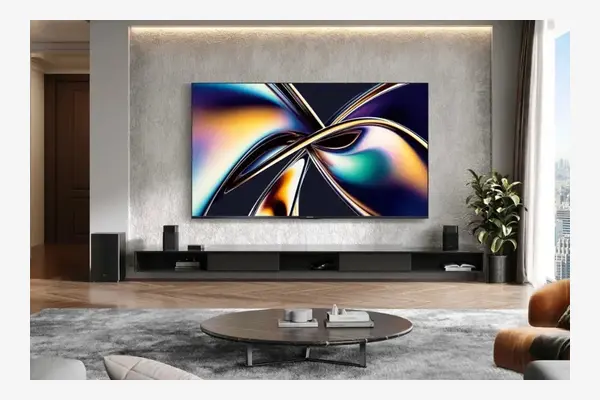
Samsung QN90F (Neo QLED / mini-LED)
around 1,400 to 1,800 dollars as of March 2026 (65-inch, confirm current price)
If your TV faces a window or you watch a lot of daytime sport, this is the type to buy. The mini-LED backlight pushes very high peak brightness, measured by reviewers above 2,000 nits on highlights, and the matte anti-glare screen handles a sunlit room better than almost any OLED. Contrast is excellent for an LCD thanks to its many dimming zones, and there is no burn-in to think about. The one tradeoff you accept is faint blooming around bright objects on black, and black that is deep but not the absolute zero an OLED gives. Smaller sizes also use fewer dimming zones, so the 43 and 50-inch models do not perform like the larger ones.
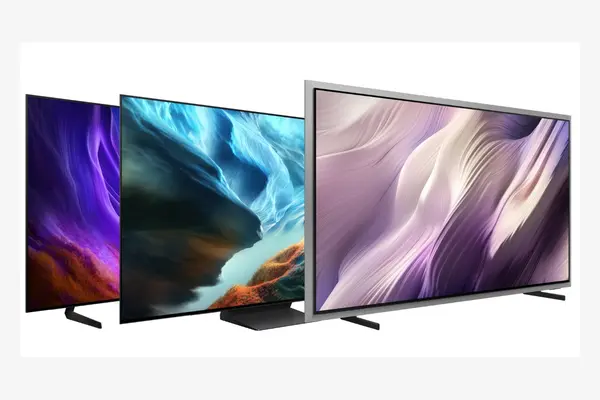
LG OLED C-series (WOLED)
around 1,800 to 2,700 dollars as of March 2026 (65-inch, falls through the year)
The OLED most people should look at first. You get the perfect black and infinite contrast that define the technology, with brightness that is now genuinely strong for a mixed living room, plus a full set of gaming features. It is meaningfully cheaper than the flagship OLEDs and the gap to them is mostly peak brightness and the absolute color volume, neither of which most viewers will miss. The honest tradeoff is that in a very bright room at midday it can still be out-shone by a mini-LED, and a large full-white scene dims to protect the panel. In a dim or normal room it is the better all-round picture for the money.
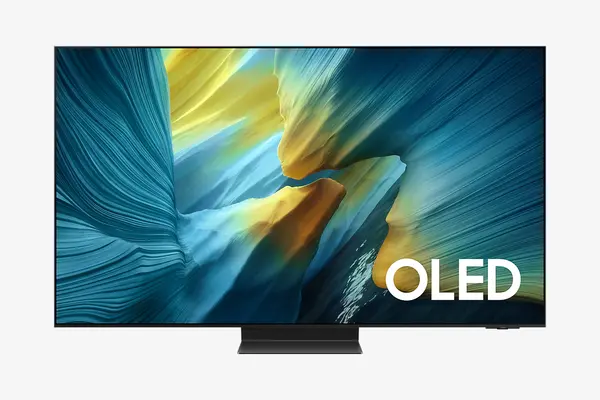
Samsung S95-series QD-OLED
around 2,500 to 3,300 dollars as of March 2026 (65-inch, flagship pricing)
The picture-quality ceiling if budget is not the limit. A QD-OLED panel uses quantum dots instead of a white-plus-color-filter layer, so colors are more saturated and peak brightness is higher than a standard WOLED, with 2026 panels measured well above 2,000 nits while keeping perfect OLED black. It is the most complete image you can put on a wall in a dim room. The tradeoff is simply price, and that in a very bright room you are paying flagship money for contrast that daylight partly washes out anyway, where a cheaper mini-LED would look brighter to your eye. Buy it for a controlled-light room where the picture is the point.
Which one suits you
It comes down to your room and how you watch, not to which technology is best in the abstract. Frame it as a choice and the answer is usually obvious.
- Choose OLED if your room is dim or you control the light, and movies and contrast matter most
- Choose OLED if you want the deepest black, the widest viewing angle, and the thinnest panel
- Choose QD-OLED specifically if it is a dark-room cinema and you want the brightest, most colorful OLED, money aside
- Choose OLED if you watch a normal varied mix, because modern burn-in defenses make the fear largely moot
- Choose mini-LED if your room is bright or sunny, or you watch a lot of daytime sport and news
- Choose mini-LED if a TV will double as a PC monitor or show static logos and HUDs for hours daily
- Choose mini-LED if you want the most brightness and screen for the dollar, with zero burn-in worry
- Choose basic QLED only on a tight budget where you accept gray-ish blacks for a bright, cheap big screen
Start with the room, then pick the tech. Dim room, films first: OLED. Bright room, daytime sport, or static-content worry: mini-LED. The label on the box matters less than the tier of the set, since a well-reviewed mini-LED beats a weak OLED and a strong OLED beats a weak mini-LED. So once the room has decided the type, spend your budget on the best-rated model of it.
Frequently asked questions
For picture quality in a dim room, yes: OLED gives perfect black and infinite contrast that no backlit set can match. But QLED and mini-LED get brighter, beat OLED in a sunny room, cost less, and have no burn-in risk. There is no single winner, only the right match for your room. Films in the dark point to OLED; bright-room and daytime viewing point to mini-LED.
For normal mixed viewing, no. Modern OLEDs from 2023 onward use pixel shifting, logo dimming, and automatic panel refresh, and multi-year accelerated lab testing at RTINGS finds they resist burn-in well under varied content, sometimes failing less often than the LCDs beside them. The real risk is narrow: many hours a day of the same static image, such as a fixed channel logo, a game HUD, or PC desktop use. If that is how you watch, a mini-LED avoids the worry entirely.
Mini-LED is a better version of QLED, not a separate technology. Both are LCD TVs with a quantum-dot color layer. A basic QLED uses a simple backlight with few or no dimming zones, so dark scenes look gray. A mini-LED splits that backlight into thousands of tiny zones that dim independently, giving far deeper blacks and stronger contrast. Samsung markets its mini-LED sets as Neo QLED. If you want the best LCD picture, you want mini-LED.
A mini-LED, in most cases. It gets much brighter than a typical OLED, often above 2,000 nits on highlights, and the better sets use a matte anti-glare screen that fights reflections from windows and lamps. In a bright room those traits matter more than OLED's contrast, since ambient light washes out deep blacks anyway. A flagship 2026 OLED is now bright enough to cope with a bright room too, but you pay a lot more for that, so for daylight the value usually sits with mini-LED.